make preferable
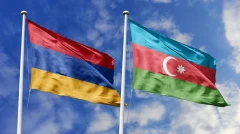
Amid U.S. pressure to limit Iran’s role in Iraq, Azerbaijan is actively attempting to enter the country’s energy market, redefine the regional balance of power, and reduce Tehran’s strategic influence, Fars News reports.
Relations between Azerbaijan and Iraq have undergone significant changes in recent years. The two countries have shifted from symbolic ties in past decades to strategic cooperation in energy, security, diplomacy, and trade. However, what has drawn the most attention from regional analysts is Baku’s growing presence in Iraq’s gas market and its efforts to replace Iran in this vital sector.
For years, Iraq has faced a crisis in gas and electricity supply. After decades of war and sanctions, the country’s energy infrastructure has suffered extensive damage.
In this context, Iran became Iraq’s main supplier of gas, especially for power stations in southern and central parts of the country.
Iraqi officials have consistently claimed that there is no alternative to Iranian gas. However, U.S. officials—particularly during Donald Trump’s presidency—sought to reduce this dependency. Washington applied pressure on Baghdad to explore alternatives.
Initially, Iraq considered importing liquefied natural gas (LNG) from countries like Qatar and Algeria, but those options proved neither financially nor geographically viable. Under these circumstances, Azerbaijan emerged as a suitable alternative. With gas reserves in the Caspian Sea and the ability to export via the Southern Gas Corridor to Europe, Azerbaijan could potentially divert part of its supply to Iraq.
In May 2025, the “Baghdad Energy Dialogue” took place, with a particular focus on cooperation with Azerbaijan. Working groups were formed to examine legal and technical matters, including gas transportation, pricing, contract duration, and coordination with Turkey’s infrastructure.
The main goal: supply Iraq with 5 to 7 billion cubic meters of gas annually by 2027. At this level, Azerbaijan could cover up to 15% of Iraq’s electricity needs.
Alongside gas export discussions, Azerbaijan’s state oil company SOCAR requested participation in the reconstruction of the Baiji and Kirkuk refineries. The country also recently announced plans to open a consulate in Erbil. This move would not only facilitate consular and commercial matters but also pave the way for direct cooperation with Kurdish oil companies.
According to the Middle East Forum analytical platform, Iran’s role in this equation is complex and multifaceted. On one hand, Azerbaijan currently collaborates with Iran to transport gas to other countries through swap deals—sending excess gas via Iran to Turkey or Armenia, and vice versa—demonstrating that Iran still plays a part in the regional gas network.
However, the long-term goal of Baghdad and Baku to reduce Iran’s role in Iraq’s gas market is evident. The United States strongly supports this initiative and has even pledged to invest in Iraq’s gas infrastructure if the project succeeds.
In this context, Azerbaijani officials have also begun negotiations with Iran, aiming to supply part of Iraq’s demand through Iranian swaps in case Azerbaijan cannot directly meet the volume—without paying Iran any money. In other words, Iran’s role could be reduced to a revenue-free transit corridor.
One of the main obstacles is the disagreement over contract duration. Azerbaijan prefers long-term agreements to ensure investment security, while Iraq’s politically unstable government leans toward short-term, flexible contracts.
Furthermore, Iran’s political and military influence in Iraq remains significant, and some groups aligned with Tehran may oppose these developments.
Overall, what we are witnessing is a deliberate and structural effort to reduce Iran’s influence in Iraq’s energy market, with Azerbaijan positioned as a new and active regional player. This development carries not only economic implications but could also shift the geopolitical balance in the region.
If the gas transport projects from Azerbaijan to Iraq succeed and Azerbaijan replaces Iran in Iraq’s energy portfolio, Tehran will lose part of its strategic influence. While Iran still holds numerous political and defense tools in Iraq, the energy sector is becoming a zone of serious competition—one that could reshape the balance of power in the Middle East.