make preferable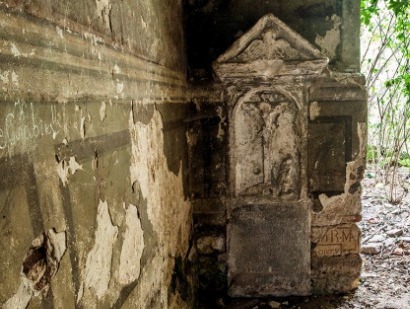
A unique 414-year-old Armenian monument has been discovered in a village cellar in Ukraine’s Ternopil Region, AnalitikaUA reports.
In Yazlovets village, researchers accidentally found a true historical treasure — an “Armenian Well,” which dates back to 1611.
For more than four centuries it had remained almost unknown, as most of the structure lies underground.
From the outside, it appears to be an ordinary spring with a stone lining and an iron pipe, but beneath it is a complex hydraulic structure built by Armenian masters of the 17th century.
Water from the powerful source first collects in an underground reservoir and then flows out.
On the wall of the spring, a stone-engraved tile has been preserved with inscriptions in Latin and Armenian, stating: “Hakob the Armenian built this for the public in 1611. This cross and the constructed spring are the work of Hakob and his brother, Stepanos. Abraham, the master who carved on stone, made [it] with dedication.”
The upper part of the tile is decorated with an image of an eagle with open wings, and beneath it there is a cross with an unusual floral ornament.
This monument is impressive not only for its age but also for its craftsmanship.
Researchers assume that the Armenian masters of Yazlovets created also the carved decorations for the local Assumption of the Blessed Virgin Mary church and for the gates of the old fortress.