make preferable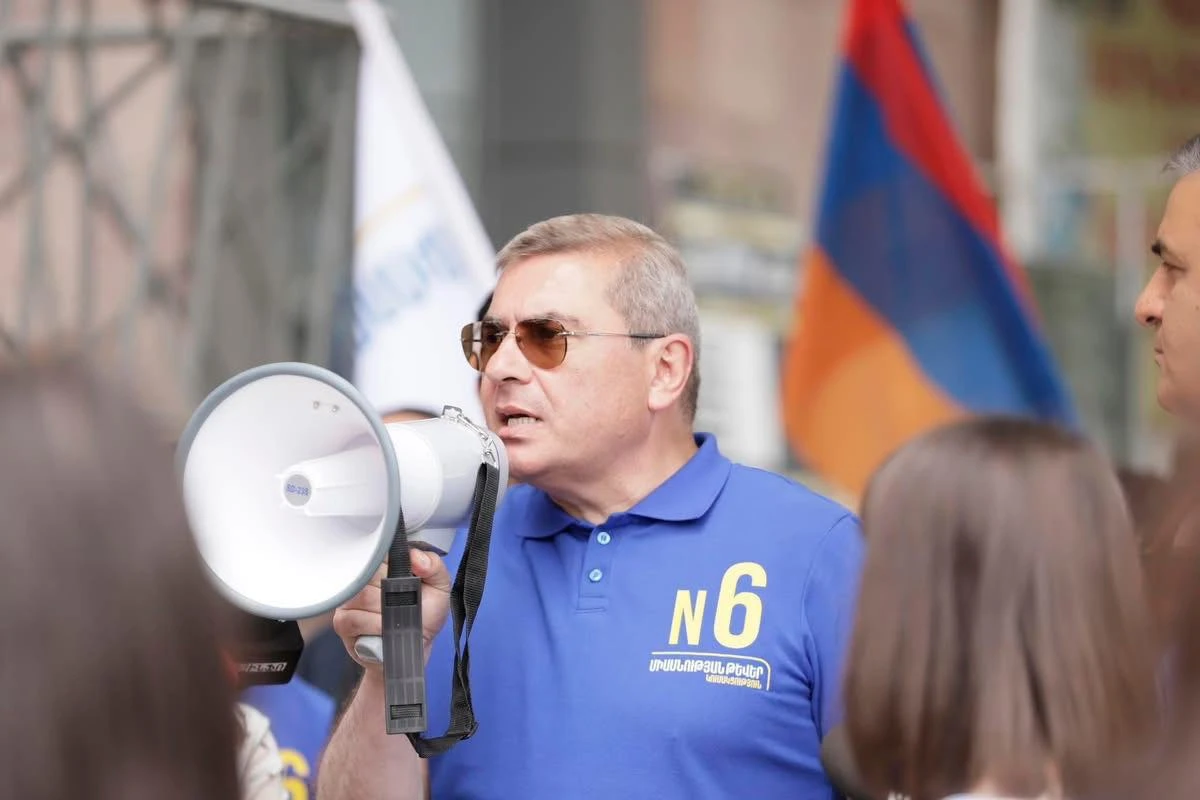
After the first information about US Secretary of State Marco Rubio’s brief visit to Yerevan was disseminated, under the influence of domestic political and parliamentary election campaign sentiments, almost everyone’s primary perception was that this was being carried out solely to provide political support to the current authorities in Armenia, especially to PM Nikol Pashinyan, according to Wings of Unity party’s MP candidate and former chairman of the State Revenue Committee of Armenia, Davit Ananyan.
Ananyan added as follows, in particular: “However, subsequent events and the study of the content of the signed documents showed a much deeper and broader geopolitical picture.
Rubio’s visit, in fact, concerned not so much the domestic political agenda of Armenia as much as the global strategic interests of the US in the South Caucasus.
The main goals of the visit were clearly the following:
–Rapid consolidation of the US strategic presence in the region,
–Political and legal strengthening of the TRIPP project,
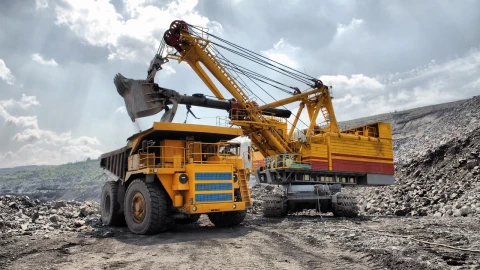
–Expanding control over the supply chains of critical minerals,
–Integrating the South Caucasus into the Western geopolitical system,
–Forming a new corridor architecture bypassing Iran and Russia,
–Limiting China’s ‘One Belt, One Road’ strategy.
And only at the end of all this, also demonstrating some political support for the current authorities of Armenia before the [parliamentary] elections [on June 7].
However, there is an extremely important circumstance here.
If the primary purpose of the visit were precisely political ‘support,’ then it is difficult to imagine that the US Secretary of State would be limited to airport-format meetings and would actually be in Armenia for only about 40 minutes, without the full protocol of a state visit, without in-depth political contacts, and even without a meeting with the [Armenian] prime minister.
This in itself is already a very telling political signal. It shows that for Washington at this phase, the priority is not the domestic political fate of Armenia, but the rapid consolidation of a new regional geo-economic and geopolitical architecture.
But Armenia’s authorities are viewed in this process primarily as a current operational partner in the implementation of this strategy.
In other words, a much bigger game is underway in the South Caucasus today than an ordinary [parliamentary] election campaign [in Armenia].
The region is becoming an important node of the global power clash, new geo-economic corridors, energy control, and global rearrangements.
And it is at this historical and extremely dangerous phase that our compatriots must answer the most important question on June 7: are the current authorities of Armenia and Nikol Pashinyan capable of steering skillfully, coolly, and with a state mentality the helm of the country in such complex geopolitical conditions? Can they protect Armenia’s interests in a reality where big countries are fighting not for statements, but for corridors, resources, zones of influence, and strategic control? I believe the answer is obvious.
The state cannot safely pass through such a historical ‘storm’ with random decisions, situational politics, and the logic of adapting to the agendas of external forces.
At this phase, Armenia needs not another propaganda governance, but state thinking, experience, calculation, and national responsibility.”