make preferable
Last week, 961,000 flowers were exported since June 1; and if we look at the geographical scope, they were exported to the United Arab Emirates, Romania, Bulgaria, Latvia, Cyprus, the Netherlands and so on, the list is long. Deputy Minister of Economy Arman Khojoyan announced this today during the Cabinet meeting of the Armenian government, referring to the decision adopted by the government last week, which subsidized the exports of certain goods from Armenia.
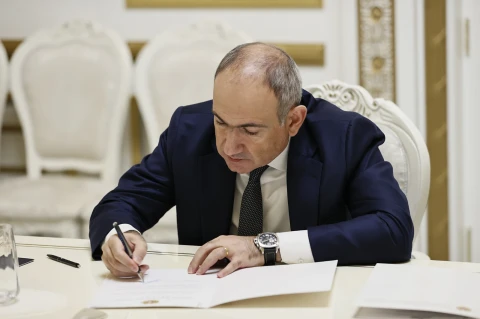
In turn, Prime Minister Nikol Pashinyan noted as follows: “The Prime Minister of the Netherlands wrote to me also in a personal letter that they pay special attention and will also assist our business entities so that they do not have any problems. It is about the rose market, because I remember that last October, when we were visiting various places, we kept thinking about how to consolidate our rose industry so that we could gain access to the Dutch markets. But as they say, Saturday came earlier than Friday, and now this is a very big opportunity.
For eight years, we have been assisting our business entities, asking, [urging] them to bring their products to standard. Now the time has come for us to find out who responded to these appeals and support programs, and who did not. I am sure that those who responded will not have any problems at all, while those who did not respond always had that problem.
During this time, we also had new transport opportunities, both lines of the Akhalkalaki-Kars railway are operating. I had a conversation also with the prime minister of Georgia on this topic, and he also assured that there will be no problems in either direction. We spoke also with the president of Turkey on this topic, and they also reaffirmed that these directions are open. We hope that the Armenia-Turkey railway will also be opened as quickly as possible; and not to mention within the framework of the implementation of the TRIPP project, of course, the opportunities will increase significantly.”
Pashinyan happily noted that the response to their decision was much faster than anyone could have expected.
“We [i.e. the incumbent Armenian authorities] have always worked to diversify markets, and this is paying off. Now we need to promote the creation of logistics centers so that tomato producers can find a formula to act as a unified exporter, because in many cases there is interest in the quality of the product and the purchase of the product, but when it comes to the amount, it turns out that we are able to produce only part of the amount they are interested in; this can be compensated for by implementing consolidated supplies. There are mega-networks that are interested, but the small amount is a problem for them," the Armenian premier said.