make preferable
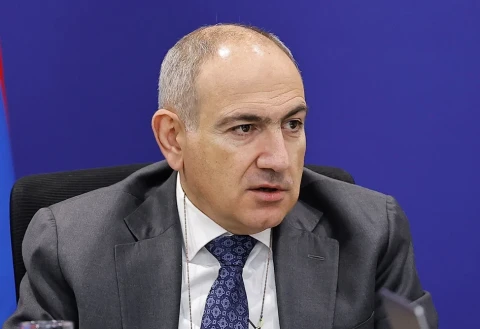
The Zhoghovurd daily of Armenia writes as follows, in particular: The formation of the 9th convocation of the National Assembly [(NA)] of Armenia is not just the start of another parliamentary cycle. Although the changes that have taken place from the outside may seem technical—a new [parliament] president, a new leadership, a redistribution of committees, in reality the process is much deeper. With the election of Ruben Rubinyan [as the new president of the parliament], [Prime Minister] Nikol Pashinyan, in fact, begins the construction of a new architecture of power, where the parliament should be not only a legislative body, but also a new base of political overseeing.
Rubinyan's election as a political message
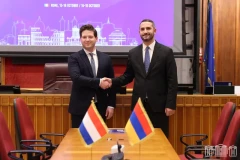
In recent years, Ruben Rubinyan has been associated with the public primarily with foreign policy, especially the process of normalizing Armenian-Turkish relations. However, his transfer to the position of president of the National Assembly means that the prime minister is already entrusting him with not only a diplomatic, but also a very important domestic political role.
The position of NA president in Armenia’s political system has long ceased to be exclusively ceremonial. It has become one of the centers for balancing within the authorities, and sometimes also managing political processes in crisis situations. With Rubinyan’s appointment, Pashinyan is handing over the leadership of the parliament to the politician who is considered one of his most loyal teammates.
The new role of the parliament
The experience of the 8th convocation [parliament of Armenia] showed that, under the conditions of the presence of a parliamentary majority, the National Assembly was often acting according to the logic of a mechanism for quickly approving government initiatives. The main question of the new convocation [parliament] is whether this model will be preserved, or whether the authorities will try to give the parliament a more active political role.
So far, all signals indicate a limited version of the second: the parliament may become not an independent counterweight, but a more effective platform for political coordination within the authorities. Rubinyan’s political experience, negotiation skills, and team discipline are most suited to this goal.
Recent personnel developments show that a process of rearrangement is underway within the authorities. (...).
A generational change within the CC [i.e. the ruling Civil Contract Party and its parliamentary faction]?
The composition of the new parliament also shows another trend: the role of young and middle-generation politicians in the ruling team is gradually increasing. Rubinyan is one of the most visible representatives of that generation. His election [as parliament president] can be viewed as a signal that Pashinyan is trying to ensure the long-term stability of power not only through personal standing, but also through new political figures.
(...).
The parliament led by Rubinyan is also a new challenge for the opposition. If in the past, opposition factions often put the emphasis on sharp political clashes, in the new situation they will have to operate in a more organized parliamentary environment, where the procedural management of sessions, the work of committees, and the formation of agendas can become additional tools of influence for the authorities. This is where the role of the NA president becomes crucial: he can not only chair the sessions, but also influence the pace, format, and public perception of political discussions.
All these processes together show that Nikol Pashinyan is trying to move on to the next phase of governance of power. In the post-war years, his system was based mostly on crisis-centered centralized governance. Now, when a new parliament is being formed, the authorities are trying to create a more institutional, but at the same time highly controllable governance model.
In this model, Rubinyan’s parliament should become not an independent political pole, but an important component of the new architecture of Pashinyan’s rule, ensuring political stability, team consolidation, and controllable management of public processes.