make preferable
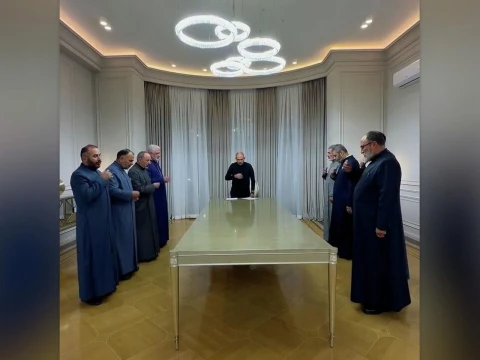
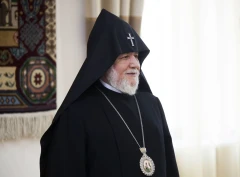
The preliminary hearing in the criminal case against Catholicos of All Armenians Karekin II and six bishops and archbishops—members of the Supreme Spiritual Council of the Armenian Apostolic Church, has been scheduled for Friday at 4:30pm. It will take place at the Vagharshapat city courthouse, lawyer Ara Zohrabyan wrote on Facebook.
Zohrabyan added as follows: “The Catholicos of All Armenians and the bishops (archbishops), in accordance with Section 4 of Article 272 of the RA [i.e. Republic of Armenia] Criminal Procedure Code, will not attend this court hearing. The defense attorneys will participate in the hearing.
I remind that according to the indictment, the Catholicos of All Armenians declared the former Bishop Gevorg Saroyan defrocked, and it was this defrocking that has been qualified by the indictment as an obstacle to the execution of the judicial act.
Therefore, the first and main legal question put before the court should be the following: can declaring a bishop defrocked, as an independent spiritual-canonical act, in itself be recognized as a criminally punishable ‘obstacle?’
The Constitution and laws of Armenia establish for the state not only a general requirement of neutrality, but also a direct obligation not to enter the sphere of internal governance and canonical life of the Armenian Apostolic Holy Church.
The ordination of a bishop, the maintenance of his spiritual status, disciplinary responsibility, and defrocking are the key elements of that internal life.
The state does not ordain a bishop.
The state does not confer the episcopal rank.
The state does not determine the conformity of the clergyman’s conduct with the rules of the Church.
Consequently, the state cannot decide whether a specific person, regardless of the decision of the highest canonical authority of the Church, should continue to be considered a bishop or not.
When the state links the authority to declare a bishop defrocked to the obstruction of a secular judicial act, the state reserves to itself the authority to make the final determination of spiritual status. That is, it intervenes and makes the content of the spiritual authority a subject of discussion. This is a direct example of prohibited interference. In this case, the degree of interference is even higher, since the threat of criminal liability is applied.”