make preferable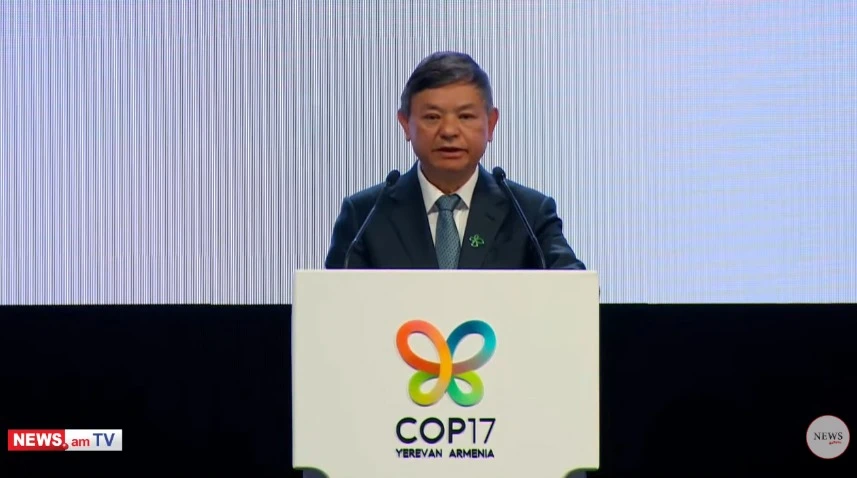
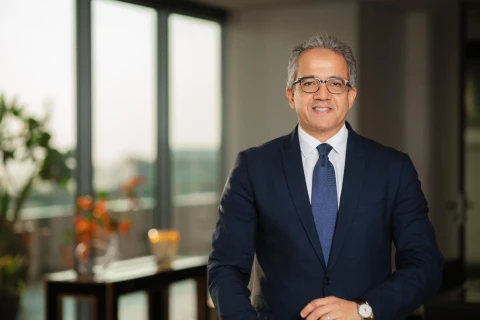
China has outlined three proposals for advancing global biodiversity conservation, calling for stronger international cooperation, increased support for developing countries and more decisive action to meet global targets. The proposals were presented by China’s Minister of Ecology and Environment, Huang Runqiu, at the Leaders' Summit on Biodiversity held in Yerevan on October 16 as part of COP17.
Huang expressed his pleasure at attending the COP17 Leaders’ Summit in Yerevan and thanked Armenia for its invitation and the excellent organization of the conference.
He emphasized that biodiversity was essential to human survival and development. As president of COP15, China had demonstrated strong political will and taken decisive steps to initiate the adoption of the historic Kunming-Montreal Global Biodiversity Framework, which had established a global roadmap for biodiversity conservation through 2030 and beyond. Over the preceding four years, implementation of the framework had significantly strengthened the international community’s political commitment to biodiversity conservation.
According to Huang, all participating parties were actively working to update their biodiversity strategies, action plans and national targets.
He noted positive developments in global ecosystem restoration and protection, with more than 100 million hectares of land undergoing restoration or being managed to improve their condition.
The share of strictly protected natural areas was expected to exceed 20% of the world’s total land area, while populations of half of the monitored wildlife species were showing sustained growth. Remote sensing data indicated that, over the preceding decade, the global rate of loss of ecologically intact natural areas had declined by one-third, the rate of deforestation had fallen by one-fifth, and mangrove coverage had increased.
Huang also pointed out that the proportion of blue and green spaces had grown in two-thirds of the world’s 33 largest metropolitan areas.
He attributed China’s progress in biodiversity conservation to its implementation of President Xi Jinping’s vision of ecological civilization. In recent years, China had adopted and implemented the Code of Ecology and Environment, become the first country in the world to introduce an ecological conservation redline system, accelerated the development of a protected-area system centered on national parks, and carried out large-scale biodiversity conservation projects. China had recorded increases in forest area and growing stock for 40 consecutive years, while the area of sandy desertified land had been declining for many years.
Huang reported that a 3,050-kilometer ecological protection belt had been established around the Taklamakan Desert. Mangrove coverage had reached 31,700 hectares, 44% more than at the beginning of the century. More than 80% of China’s key protected wild plant and animal species were effectively safeguarded. The threat level had declined for nearly 500 wild animal and plant species, while populations of more than 300 rare and endangered species were growing steadily.
He added that China was working closely with all participating parties to implement the Kunming-Montreal Global Biodiversity Framework and the initiative to jointly build a green belt and green road.
China had also initiated the establishment of the Kunming Biodiversity Fund, contributing 1.5 billion yuan. The fund had financed 31 projects across 45 countries, providing practical assistance to developing countries seeking to strengthen their nature conservation capacities.
Despite these achievements, Huang cautioned that the situation required a realistic assessment. Half of the implementation period for the Kunming-Montreal Global Biodiversity Framework had already elapsed, but a gap remained between actual progress and the goals and vision set for the future.
Progress toward the 30 by 30 target, which calls for protecting 30% of land and 30% of marine areas by 2030, was lagging behind schedule. Only 60% of the target for terrestrial protection and 30% of the target for marine protection had been achieved.
Huang also highlighted the substantial global funding gap for biodiversity conservation, noting that the fundamental drivers of ecosystem degradation had not been brought under control. Tens of thousands of species remained threatened with extinction, while the unregulated exploitation of natural resources and the spread of invasive alien species continued to pose serious challenges.
He stressed that the international community needed to strengthen consensus and cooperation and take systemic, transformative action to achieve the agreed targets on time.
Against this backdrop, Huang outlined three proposals for consideration by all parties to the Convention. First, he called for sustained commitment and a focus on concrete action. He said countries needed to accelerate the fulfillment of their commitments to mobilize resources and build capacity, advance national strategic action plans, and translate the goals of the Kunming-Montreal Global Biodiversity Framework into national policies and practical measures.
Second, he advocated mutually beneficial cooperation based on genuine multilateralism. This would require increasing financial and technological support for developing countries and promoting the full, balanced and effective implementation of the Kunming-Montreal Global Biodiversity Framework.
Third, Huang called for a governance model that involved a broad range of stakeholders and enabled profound transformation.
He said governance mechanisms should bring together governments, businesses, civil society organizations and the public, while strengthening interagency coordination and policy coherence. More effective biodiversity conservation, he added, would also help enhance the sustainability of development.
Huang concluded by emphasizing that biodiversity conservation was a shared responsibility and mission of all humanity. China was ready to work with all parties to achieve global targets through practical action and contribute its experience and efforts to building a shared future for all life on Earth.