Preferred
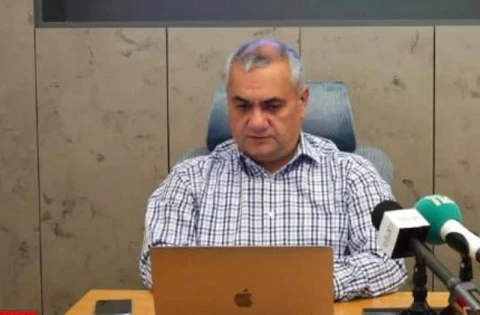
The initialing of an Armenian-Turkish roadmap, as well as the signing of the Armenian-Turkish protocols, has been the most significant event of this year. This brought about serious changes not only in the to states’ political life, but also in the way of thinking. This has also been the axis of further domestic and foreign political developments this year and will play this role next year, the political analyst Artak Shakaryan told NEWS.am.
Armenia’s foreign policy can be considered successful next year if the Armenian-Turkish protocols are ratified before next April. It will have most favorable consequences for Armenia, particularly for its international role. “The ratification of the protocols after next April may have unfavorable consequences,” Shakaryan said. He pointed out that every day postponing the ratification is of crucial importance for the Armenian-Turkish protocols. It is not only that the 95th anniversary of the Armenian Genocide will be marked on April 24. Rather, 2010 is a pre-election year in Turkey, and every day that brings the election date closer puts off the ratification of the protocols, he said. “If Turkey refuses to ratify the protocols, it will find itself under pressure in the form of Yerevan’s pulling out of the process. On the other hand, the process of international recognition of the Armenian Genocide will hardly be intensified as a means of pressure,” Shakaryan said.
As regards the Nagorno-Karabakh peace process, he does not rule out that next year, under Turkey’s pressure, the resolution will be linked to the Armenian-Turkish normalization process. “Resorting to a compromise, the international community may influence the parties to the Nagorno-Karabakh conflict toward signing a symbolic document, just to show some progress. But no radical changes in the Nagorno-Karabakh peace process should be expected next year,” Shakaryan said.
T.P.