Preferred
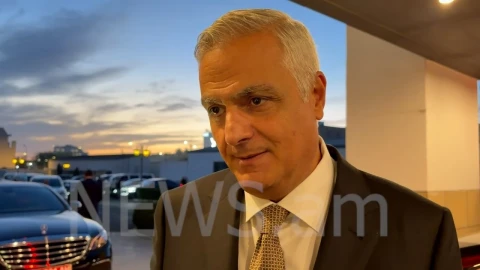
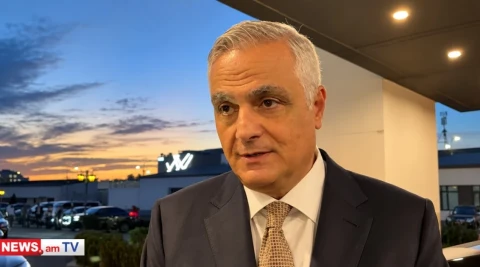
Below is an interview with Armen Grigoryan, Secretary of the Council for IT Development
NEWS.am: The 3G network was recently introduced in Armenia’s telecommunication sector. It is unavailable even in Russia now. And 4G is even being talked about. In the context of certain activity, can we say Armenia is one of the regional IT leaders?
A. Grigoryan: I can say that Armenia is on the right way rather than one of the regional leaders. Since our country is very small, I am sure it will become world leader in a couple of years. For example, the equipment the Orange Company is installing in Armenia is not operating even in France. They are faced with the problem of re-equipment there. In this aspect we, of course, will be leaders.
NEWS.am: Competition between large companies has recently brought about obvious changes in customers’ favor. The Orange Company’s entry to our country had a great effect. Let us talk about it and its impact on Internet services development.
A. Grigoryan: No doubt, Orange is Europe’s leading company rendering new telecommunication services, especially various types of mobile communication – mobile TV and others. It is an ordinary service in Europe. The companies that were informed of the Orange Company were well aware of that, which caused other companies, particularly VivaCell MTS, to start rendering the same services even before Orange came to Armenia and introduced its services. ArmenTel too is installing equipment to be able to compete with other companies. All that had rather serious influence on the market. Companies start rendering new services as soon as possible so as not to remain behind their rivals, which, under different circumstances, they may not have done during the coming two years.
NEWS.am: At present, large mobile communication companies also render affordable wireless Internet services. What is Internet providers’ future? Can we say the companies will “complete” their work during the coming few years?
A. Grigoryan: Day after day Internet services are developing simultaneously with mobile communication services. Indeed, small Internet providers are now facing serious problems – they cannot stand market competition and their offers, potential and investments are insufficient as compared with such giants as ArmenTel, VivaCell MTS and Orange Armenia or, say, ADC. The last named carried out tremendous work to render special Internet services – it laid fiber-optic cables throughout Yerevan and so on. Competition causes companies to reduce their prices. Some representatives of small companies express fears about the dumping prices set by large companies, which makes the small ones’ activities “unjustifiable.” Of course, large companies are able to make up for their losses due to revenues from other services.
I think it is normal. It is international practice – the market itself regulates everything. Unfortunately, the companies that cannot stand competition have to close down. On the other hand, I cannot conceal the fact that, several years ago, the same small companies received superprofits without doing anything. For example, they leased a 5GB channel and signed contracts with a “thousand” companies for up to 20GB. That was fraud – they disconnected some and connected others thereby ensuring superprofits for themselves. This time is past, and now every client wants to have round-the-clock Internet communication and buys this service from the provider ready to render it.
Of course, some of the companies – Arminco, Web — are still working on the market. But they have to make huge investments to stand competition.
NEWS.am: Mr. Grigoryan, what about Internet prices –are they high or low in Armenia? What is the price-quality relationship?
A. Grigoryan: Price changes are evident, but it would be wrong to say that prices are best in Armenia. In any case, prices have rapidly been changing in Armenia over the last one or two years, showing a downward trend, with the Internet communication quality improving. Of course, was not fully satisfied with the quality of services. We will be satisfied after the prices go down to the international level. On the other hand, the development of Internet communication in Armenia is facing a number of problems, and we cannot compare with developed European countries. Traffic channels are an expensive treat. Also, Internet is affordable there – the number of users is large, so the service is cheaper. But I would like to note that the positive dynamics is highly promising in Armenia. The development will reduce prices, and Internet services will be universally affordable. As regards the quality, companies have to ensure quality now. Otherwise they will lose their customers. People want to watch movies or talk by means of Skype, they are not contented with using e-mail alone. All the main services are now available for U.S. $30 in Armenia just as in other countries. The quality may be higher there, but I think the progress will be more appreciable in a year.
NEWS.am: In this context, what is the role of the Government or of the Council for IT Development?
A. Grigoryan: The Government’s role is resolving political problems, which, in turn, helps resolve economic problems, especially such problems as the improvement of the Armenian-Turkish relations. Larger-scale changes can be expected then. At present, ArmenTel is negotiating the laying of a fiber-optic cable from Turkey to Armenia, bypassing Georgia, with the Turkish side. If the problem is resolved, higher-quality Internet services will be available at a price twice as low. Such large companies as ArmenTel, VivaCell MTS and Orange Armenia have taken interest in this. It will quickly make Armenia a country where Internet services of European quality will be available.
Our Councils’ task is to ensure equal competition to prevent any violation of others’ rights – be it by the Government or by any private company.
I would also like to address one more important task, namely, combining. High-speed Internet connection will enable any personal in any part of Yerevan to watch Armenian TV channels, have quick access to Armenian websites and so on. This all depends on the traffic inside the country. We have not a normal network inside the country. The Government is trying to contribute to this now. The RA Ministry of Economy elaborated a concept of forming an internal network. In Armenia, most of the information is outgoing to become incoming later. For instance, to get information by means of VivaCell you have to send a signal to the United States or Europe, which later returns to VivaCell. The problem can be resolved: VivaCell can be directly connected to Orange Armenia and vice versa. At present 90% of information leaves Armenia to return later because the country has not an internal network and proper combining conditions. The formation of an internal network will enhance the efficiency of equipment and reduce expenses.
NEWS.am: What are your forecasts about the Armenian telecommunication industry for the next few years?
A. Grigoryan: Since all the three mobile operators in Armenia are world-famous telecommunication companies, we will see further development. One more important factor, namely, the formation of Armenian content, can further this development. The Armenian content must be developed for the innovations to be available to any Armenian.
T.P.