Preferred
Domestic policy
This week Armenia has marked the 2nd anniversary of the tragic events on March 1, 2008, when the domestic political developments reached their climax – unprecedentedly dramatic events, with their consequences, in Armenia’s modern history. Two years after, the events still remain a wide dividing line between the two political camps. The political parties forming Armenia’s ruling coalition have spared no efforts to “turn over” the tragic page, without, however, creating any preconditions for that. For its part, the opposition Armenian National Congress (ANC) keeps on stressing that identifying and punishing the persons responsible for the death of people is one of its priority tasks. As politicians continue arguing, no one has so far been held responsible for the death of eight demonstrators, an officer and a soldier of the interior troops. It is also noteworthy that the recent configurations in the Armenian political arena have not in any way influenced the political assessments of the tragic events made by a number of parties. Thus, although the Armenian Revolutionary Federation Dashnaktsutyun (ARFD) is making futile efforts to gain a firm foothold in the opposition camp, its assessment of the 2008 confrontation is hardly different from the official one. The Heritage Party, which dissociated itself from the ANC last autumn, continues laying full responsibility for the death of people on the authorities.
As regards Levon Ter-Petrosyan’s supporters, they not only marked the 2nd anniversary of the tragic events this Monday, but also took advantage of the event to make their assessments of the domestic political situation, Armenian-Turkish reconciliation and Nagorno-Karabakh peace process. One of the conclusions suggested by the massive rally and processions held by the extra-parliamentary Opposition this week is as follows: despite its restricted access to TV and radio, the fact that the next parliamentary and presidential elections will only be held in the distant future, the ANC has managed to retain its active members, who are ready to take part in street actions without any “special invitation.” The active members in question could be a great help in organizing larger-scale actions in case the domestic political situation is exacerbated due to, among others, external factors. It should be noted, however, that the ANC is unable to increase the number of participants in its street actions without potential “catalysts,” such as an unfavorable result of the Nagorno-Karabakh peace process, accompanied by problems within the government camp, or exacerbation of social conditions due to a steady price rise.
As to the statements made by Levon Ter-Petrosyan, who appeared in public after another long interval, they followed the logic of the previous assessments. The ANC leader expressed confidence that it is the “failure of the so-called policy of initiatives by Serzh Sargsyan”, rather than “a stalemate in the Armenian-Turkish normalization process,” that is in question now. Ter-Petrosyan believes that the Armenian President failed to “legitimize” himself before the international community and reduce external pressure on Armenia in the context of the Nagorno-Karabakh peace process in exchange for a dialogue with Ankara. Moreover, the pressure has even increased. Speaking of the West’s role in Armenia’s democratic development and human rights protection, the ANC leader pointed out that the Western states are pursuing their own interests in resolving problems posing threat to regional security. According to Armenia’s first president, it is in this context that the West gives priority to the settlement of the Nagorno-Karabakh conflict and Armenian-Turkish reconciliation, in contrast to the three other tasks facing Armenia – democratic development, rule of law and corruption control. The ANC leader, however, pointed out that the resolution of the Nagorno-Karabakh problem and Armenian-Turkish reconciliation meet the Armenian people’s interests.
The ANC listed its demands, as well as the time frames within which they are to be met, and on March 16, the day before the PACE Monitoring Committee is to consider the situation in Armenia, it will submit them to the CE office in Yerevan. Besides election reforms, as well as the broadcasting right for the A1+, the extra-parliamentary Opposition demanded early presidential and parliamentary elections during the period between this July and September. It should be noted that this scenario is only possible in case of a split within the pro-government camp due to unfavorable developments in the Nagorno-Karabakh peace process, which was the case in Armenia in February 1998. This would enable the Opposition to dramatically increase the number of street protestors and even stronger demand early elections. Now, however, we can say that, by listing its demands, including early elections, as well as the time frames, the ANC s most likely outlined its own program of action for the next few months. Considering the present state of affairs, the ANC’s demands can only be met in case any unfavorable changes in the foreign political situation occur.
The RA Court of Appeal started considering an appeal lodged by the lawyers of Nikol Pashinyan, Editor of the Haykakan Zhamanak newspaper, who was sentenced to 7-years’ imprisonment. The lawyers demand the reversal of the minor court’s verdict. They insist their client did not organize the riots on March 1, 2008. Rather, he called on the participants in the massive rally to calm down. The Prosecution, for its part, demands even severer punishment for Pashinyan for using violence against a public agent, namely, a policeman. The minor court did not find Pashinyan guilty.
Nagorno-Karabakh peace process and region
The most significant event that can influence further development of the Armenian-Turkish normalization process is the approval of the Armenian Genocide resolution by the U.S. House Committee on Foreign Affairs. On the night of March 4, as few as 46 members of the U.S. Congress, kept both Armenia and Turkey under a strain. The situation hanged by a thread, and the resolution was approved with only one vote more cast in its in favor.
It should be noted that the U.S. Congressmen’s decision should not be overestimated. The reason is that the same Committee approved three similar resolutions, but, due to the U.S. Executive’s efforts they did not reach the House of Representatives. Similar developments are not ruled out, and a number of prerequisites for them are available. First, the resolution was approved by a vote of 23 to 22, and no one can guarantee that, if discussed by the U.S. House of Representatives, the resolution will receive at least a few more “pro” votes, with the U.S. Administration’s resistance considered.
This resistance, which runs counter to Barack Obama’s election pledges, as well as to Hillary Clinton’s promises when she was running for the Senate, chiefly accounts for the developments. It is easy to note that the White House did not put any obstacles to the consideration of the resolution by the Committee. Rather it called on the Committee not to approve it and later, not to submit it to the U.S. House of Representatives. All this strongly suggests that the Committee approved the resolution not without the White House’s “tacit consent.”
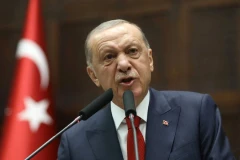
This consent can be explained. It is noteworthy that the draft resolution was put on the Committee’s agenda after Turkish Premier Recep Erdogan made strongly worded statements, linking the ratification of the Armenian-Turkish protocols to the Nagorno-Karabakh peace process. The United States must be realizing that Turkey is hostage to its “small brother”, Azerbaijan. So the U.S. is trying, through Ankara, to force official Baku into making concessions on Nagorno-Karabakh. Making Turkey dissociate itself from Azerbaijan is the only possible way of making Ilham Aliyev realize the new geopolitical situation. That is, the Azerbaijani leader must see the danger of complete isolation to stop impeding the Nagorno-Karabakh peace process.
In any case, we are not so optimistic about the approval of the Armenian Genocide resolution by all the highest instances in Washington. The United States can hardly be expected to be ready for a serious confrontation with its ally, Turkey. Unfortunately, for many years Washington has been cashing in on the Armenian Genocide thereby resolving its own problems. Much depends on Turkey itself – the White house can really get angry unless progress in the Armenian-Turkish process is registered. It is obvious that the next 45 days are most critical for Washington: either the protocols are ratified or the U.S. policy in the region can be considered a failure.
This week Armenia and Azerbaijan submitted their proposals concerning the points of a fundamental agreement that have not so far been agreed on. The situation is as follows: Azerbaijan agreed to a revised version of what is known as Madrid Principles, while Armenia submitted its remarks. Now we have to wait for the international mediators’ new actions.
Economy and social life
The Upper Lars check point has been reopened after a 3-year interval. Georgian and Russian experts reached a relevant agreement in Yerevan and Kazbegi. The agreement was reached with Swiss representatives’ participation and confirmed by relevant notes from the Russian and Georgian Foreign Offices. The Upper Lars check point was reopened for transport facilities alone. No simplified border crossing procedure is in effect for individual persons, including residents of nearby settlements. Georgian and Russian citizens wishing to cross the border have to get visas at the Swiss Embassy. Moscow and Tbilisi did not conceal the fact it was a step toward Armenia, which is actually in an economic blockade, rather than a step to improve bilateral relations. But freight traffic across the border has not been too dense.
The Yerevan Water Sewerage Company submitted an application for a higher water price to the RA Pubic Services Regulatory Commission. From July 1, the price is expected to rise by almost 20%. So the “chain reaction” is on. The rise in gas prices scheduled for April 1 caused the company to announce a rise in water prices. If we consider the expected sharp rise in prices for essential goods, with no prospects for a wage increase during this year, the immediate future does not hold anything good for the people. The authorities, however, are making empty promises to prevent an aggravation of the social situation.
Social cards in Armenia will be replaced by IDs for domestic use, Director of Nork information — analytical center Hayk Chobanyan told NEWS.am-Innovation.
“It is the next stage of social cards program that had to be implemented earlier. However, the process was postponed for several years due to a fuss made by religious organizations,” Chobanyan stated. According to him, ID cards will have irreplaceable chips with personal data. New passports with invisible chips containing personal bio-data are being elaborated. The new passports will be used for traveling abroad, while ID cars for — internal use. Chobanyan also said the new documents will be issued starting 2011.
T.P.