make preferable
NEWS.am: Mahmoud Ahmadinejad won presidential elections in Iran. Do you think he will continue furthering Iranian-Armenian relations during his second presidential term or will rather cede to Turkish-Azerbaijani pressure?
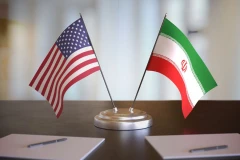
I am confident, that during the second term of Mahmoud Ahmadinejad's presidency the Iranian-Armenian relations will develop dynamically. Musavi's defeat in the race will suspend the Iran-US rapproachment, but Iran will further its regional presence and most likely the large-scale projects with Armenia will be realized.
NEWS.am: What do you think of the first term of Ahmadinejad's presidency, and what is your forecast about the second one?
My oppinion is contradictory. On the one hand, no significant reforms were realized in Iran, social conditions of the population remained unchanged and practically on the same level as 5 years ago. But on the other hand, within the past 4 years Iran became the most powerful country of the region, reinforced its positions in the Middle East and actually made American leaders launch a dialogue with Tehran. Thus, the opinion on Ahmadinejad's presidency is contradictory.
NEWS.am: How strong will be the protest in Iran after the elections? Will Ahmadinejad manage to avoid a color revolution, that became so popular recently?
Protests are already very impressive. There are victims among demonstrators, and about 7-10 days after the elections the situation will still be unstable. But a color revolution will not take place in Iran — as the government is strong, and the opposition – weak, and those yearning the revolution have no leader.
NEWS.am: Please comment on the US troops’ withdrawal from Iraq….
I consider, that US troops will partially stay in the country in any case. US military presence in Iraq might either decrease or increase depending on dialogue progress or confrontation with Iran.
NEWS.am: Recently, Tehran is relatively passive, while Ankara policy in South Caucasus is activated. To your opinion, is it connected with the elections or Iran really loses the influence?
Iran was not passive. Iranian policy is nonpublic and non-declarative. In reality its influence in the region did not weaken, but consolidated and the large-scale investment projects with Armenia proved it.