make preferable
The OSCE Informal Ministerial Meeting has been opened in Ak-Bulak, near the Kazakh city of Almaty. The Foreign Ministers of all the 56 OSCE member-states, as well as 12 partner-states, are participating in the meeting. The participants will adopt joint statements on burning international issues on the agenda.
Since 2004, the OSCE FMs’ have issued statements on the Nagorno-Karabakh peace process. The latest statement was issued in Athens last December. The statement called on the conflicting parties to complete the work on Basic Principles.
In Athens, RF Foreign Minister Sergey Lavrov, French Minister of Foreign and European Affairs Bernard Kouchner and U.S. Deputy Secretary of State James B. Steinberg issued a statement following a meeting between the Armenian and Azerbaijani FMs on the margins of the OSCE Foreign Ministers’ meeting. They pointed out progress in the negotiations and called on the sides to complete the work as soon as possible, as an agreement on the Basic Principles would allow the sides to reach a settlement and bring peace, stability and prosperity to the entire region.
In 2007, when the Madrid principles were presented, the FMs’ Council issued a statement urged the sides to settle the disagreements thereby approving a general settlement concept and, on the basis, start drafting a peace agreement.
The next year, the OSCE Ministers’ Council urged the sides to intensify the work on agreeing the Basic Principles and start drafting a comprehensive peace agreement.
In 2006, the Council called on the sides to accept the international assistance and expand cooperation to conduct a fire control operation in the fire-damaged territories and deal with the detrimental consequences, as well as strictly observe the ceasefire agreement.
A year earlier, the OSCE Ministers’ Council urged the Armenian and Azerbaijani Presidents to take the opportunities that would be afforded in 2006 to achieve serious aims within the OSCE Minsk Group.
In 2004, the OSCE Ministers’ Council welcomed what is known as the Prague process, when the OSCE MG Co-Chairs presented a framework document to the Armenian and Azerbaijani Presidents, which could be a basis for settlement. In their statement the Co-Chairs urged the Armenian and Azerbaijani leaders to take the document into account as a basis for further work.
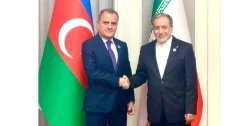
The Armenian and Azerbaijani Foreign Ministers are to hold a meeting with their Russia, U.S. and French counterparts on the margins of the OSCE Informal Ministerial.
A regular statement is most likely to be issued as a result of the five-sided meeting. Interestingly, it will be made amid recriminations the Armenian and Azerbaijani foreign offices have been engaged in for the last few days.