Preferred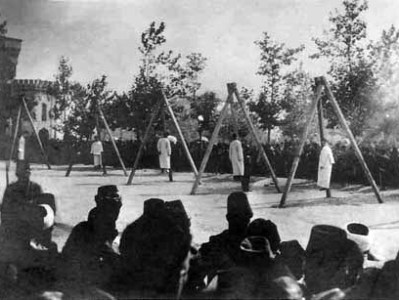
Armenian News – NEWS.am presents the abridged version of the article by André DeBattista, published in the Maltese newspaper The Times of Malta:
In a speech at Obersalzberg, prior to the invasion of Poland, Adolf Hitler made reference to some form of mass-extermination. Aware of the possible negative reactions to it, he sought to quell the fears of his supporters: “Who, after all, speaks today of the annihilation of the Armenians?”
During a recent Sunday homily, Pope Francis referred to this massacre of the Armenians and described it as “the first genocide of the 20th century”. His comments were not well received in Turkey. Mr Erodgan’s call for further historical scholarship is a vacuous statement; scholars have been frequently intimidated and access to archival material has sometimes been scant. Scholars who have engaged independently in this research have all unearthed strong evidence which supports the evidence in favour of genocide. In an edited collection of essays regarding the Armenian genocide, Norman Naimark provides a context to these chilling events.
On April 24, 1915, a total of 250 Armenian intellectuals and leaders of the Armenian community in Constantinople were deported to other parts of Turkey. Several would die; one survivor would eventually describe the experience as an “Armenian Golgotha”. This would be followed by the deportation of able-bodied men and, later, women and children.
They were forced into labour camps, taken on long death marches and murdered in the most horrendous of manners. These events were witnessed by a number of international diplomats who reported these horrors to their governments.
Most of the perpetrators were later detained in Malta between 1919 and 1921. Efforts to prosecute had failed due to a number of reasons including pressing political pressures. Their release coincided with an exchange of prisoners between Britain and Turkey.
Raphael Lemkin would later use the massacre of the Armenians as a basis for the definition of the word “genocide.” Despite the overwhelming evidence, the Republic of Turkey continues to refuse to recognise that genocide occurred.
Naimark remarked that “a healthy national consciousness cannot abide by nasty secrets hidden away in a locked drawer”. For Turkey itself, recognition could lead to a “purification of memory.” This concept, developed by the late Pope John Paul II and Cardinal Joseph Ratzinger (later Benedict XVI), rests on two assumptions: the present cannot be used as a tribunal of the past, however, the faults of the past cannot be denied. Recognition, thus, becomes a major contributing factor to reconciliation.
Recognition of the genocide might also begin to heal a century-old rift leading to more opportunities for the normalisation of relations between Turkey and Armenia.