Preferred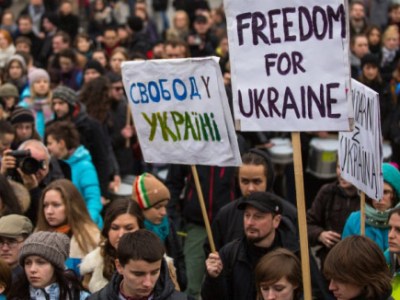
Armenian News – NEWS.am presents the abridged version of the article by Judy Dempsey, senior associate at Carnegie Europe and editor in chief of Strategic Europe, published on the Carnegie Europe website:
"On a summer’s day in August 1978, ten years after Warsaw Pact troops invaded Czechoslovakia to halt the Prague Spring, a group of leading Polish and Czechoslovak dissidents met on the crest of the Krkonoše mountains on the frontier between Poland and Czechoslovakia. The gathering was a rare occasion for them to meet and compare the goals of their human rights movements.
This need to foster closer cooperation is now being pursued by civil society movements in Eastern Europe. Like the dissidents of the 1970s, today’s activists view Moscow as a big threat, particularly after Russia’s March 2014 annexation of Crimea and the war in eastern Ukraine. And like the dissidents, they view Europe as their political home.
One of the things that motivated the Polish and Czechoslovak dissidents and others in the region was the 1975 Helsinki Final Act. This seminal post–World War II document, signed by representatives of both East and West, had given human rights a crucial status that dissidents would use to fight for and defend individual freedoms and civil rights.
Forty years later, the Helsinki Final Act is more relevant than ever for those in the new Eastern Europe of Ukraine, Belarus, Moldova, and the South Caucasus. They want the same freedoms and rights that dissidents in the old Eastern Europe attained after the collapse of the Berlin Wall in 1989 and the subsequent collapse of the Soviet Union two years later.
I was reminded of the meeting in the Krkonoše mountains when on June 3–4 individuals belonging to civil society movements from Eastern Europe gathered in Kiev to debate security issues. Just as in the 1970s, when dissidents wanted to end Communist repression and reunite with Western Europe, the members of the forum—many of them young—want to live in open and secure countries that are no longer run by authoritarian or corrupt regimes or influenced by Russia. They want to become part of a wider and safer Europe.
The civil society representatives came up with several proposals of how to increase their countries’ security. But the most concrete suggestion was how to make information secure by countering Russia’s information propaganda, which is seeping not only through the region but also among the EU member states.
The EU can do much to support these civil society movements, despite the enormous pressure activists face in Azerbaijan and Belarus. So while Russia’s influence in Eastern Europe is encouraging EaP countries to recognize why they should cooperate and why they want to get closer to the EU, the union also has a great chance to reach out to its Eastern neighbors in a more sustained and creative way. There are few excuses not to do so."