make preferable
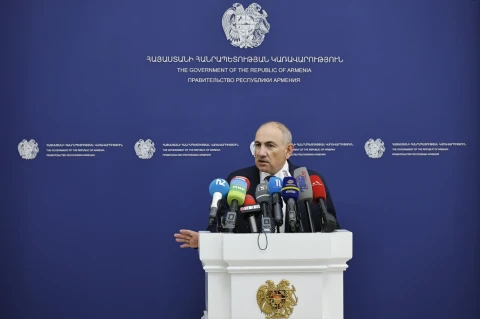
In the aftermath of the terrorist attacks in Paris border security has again been seriously questioned and the whole Schengen system cannot any longer be considered as sacrosanct. Gunter Walzenbach, a senior lecturer at the University of the West of England, Bristol, told the aforementioned in an interview with Armenian News –NEWS.am correspondent.
According to the EU President Donald Tusk, the latest attempts to save the Schengen agreement constitute ‘a race against time’, and his Commission counterpart, Jean-Claude Juncker, has repeated demands for a better external border management and more solidarity among the member states when it comes to quotas for the intake of refugees, he said.
“Both statements suggest that Brussels is facing an uphill struggle in trying to find convincing answers to pressing problems within its existing institutional arrangement. EU member states such as Germany, Hungary, Slovenia and Sweden have in response to the refugees crises re-introduced border controls and, thus, largely terminated passport free travel within the European Union.” Walzenbach said.
In his words, there are, however, two different sets of issues involved here – the refugee crises and international terrorism - which in analytical and operational terms should not be conflated. “It might be forgotten that in response to each of the two crises constellations, the Schengen agreement already allows the governments of the member states to re-instate internal border controls. These measures can stay in place for 10 or 20 days and be extended further to a maximum of 2 months as long as public policy considerations or national security concerns can justify this. Although meant as a last resort, EU authorities accept them if they are duly notified, monitoring rights respected and limits in terms of scope clearly spelled out,” the analyst said.
According to him, these standard mechanisms are now under pressure for quite different reasons: “In the first constellation, large numbers of refugees have passed through several member states making it impossible to apply Schengen rules and the related Dublin procedure. The latter would require refugees to apply for asylum in the country of first arrival, it would also imply to send applicants back to this first country of arrival or to refuse entry into the European space altogether if no legitimate asylum claims can be made. In the second constellation, international terrorism and its transnational network had been found to exploit the advantages of border free travel in the Schengen zone. The most recent atrocities, for example, were masterminded in Syria and committed in France by terrorists living in Belgium.”
Referring to the solution of the issue on refugees, Gunter Walzenbach said that with this respect European-wide quota system can be implemented, relocation of asylum seekers can be improved, joint lists of safe countries can extended and asylum claims can be processed much faster.
“The fight against international terrorism, by contrast, points to a more effective control of the EU’s common external border, simultaneously accompanied by an internal strengthening of European-wide surveillance mechanisms, more capacities to track and detain suspects, to exchange sensitive data, and last but not least, to coordinate more closely the intelligence and police services of the member states,” the analyst said.