Preferred
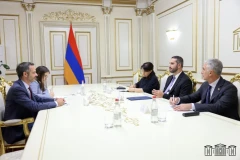
The Policy Forum Armenia and the GWU Comparative Law Program organized a panel on the position of the West in regard to the recent developments in Armenia and the possible geopolitical implications.
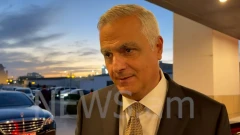
Among the panelists were the former Ambassador John Herbst, who is presently the director of Dinu Patriciu Eurasia Center of the Atlantic Council, Doctor Andrew Novo of the National Defense University, and Lilit Gevorgyan of the IHS Global Insights.
The panelists exchanged views over the events that has recently taken place in Armenia and related developments in Armenian society. In addition to domestic developments, Russia’s approach towards the Nagorno-Karabakh issue and its proclaimed role as Armenia’s main geopolitical ally, have shaped different approaches to the possible changes in Armenia․
According to Ambassador Herbst, the lack of economic development in independent Armenia, a crippled democracy, and a high volume of migration pushed the country to the brink of becoming even more dependable on Russia. The conserved stability in the domestic politics, apart from being a consequence of unfair elections, also proceeds from the conscious choice of Armenia’s civil society and its unwillingness to challenge the policy of the government, noted the experts. According to Herbst, that further complicates the situation. John Herbst stressed that in comparison with other post-soviet countries, for example Ukraine, notable for its vigorous civil society, Armenia received more financial aid per capita from the West, and, therefore, could have put more efforts in sense of transforming the society. The rest is up to the Armenian society, which should make a decision by itself, mentioned John Herbst.
The developments that took place in Armenia in July were not only a form of a protest against President Sargsyan’s ruling but also was a form of discontent with the recent position of Russia on the Karabakh issue, stressed the diplomat. Thus, according to Herbst, if the movement “survives and prospers in the future, it will hold the key to change not only the Armenian domestic politics but also its geopolitical position.”
At the same time, John Herbst considers that the change can occur in Armenia, if Armenia is willing compromise on the Karabakh issue.
As for the assertions of Russia that the United States provoke crises in the post-soviet states – Georgia, Ukraine – to encroach on Russia’s sphere of interest, according to the Ambassador Herbst, it will make sense only if the people of the post-soviet countries consider that they have no right to determine their own future.
“It is their choice, and they take the help of the USAID to develop their civil societies and to teach their political parties to be more competent, whereas the Russian reaction is that we get to choose how the governments will live. It makes no sense,” John Herbst added.
According to another panelist, Doctor Andrew Novo of the National Defense University, the developments that took place in Armenia in July can have different consequences. One of them is that they might turn the preserved political stability that the country has into “a more endemic protest”. Another possible consequence of the events is a more robust conflict in the Karabakh, which is neither in the interests of Russia, nor an option for the United States, since “the instability can escalate and become endemic, as it is in Iraq, Syria, and Eastern Turkey; such conflicts can become seedbeds for increasingly radical agendas.” Finally, the disappointment of the opposition might lead to termination of determined actions, a reality of what happens in today’s Russia, the expert noted. This, according to Novo, will turn Armenia into a completely authoritarian regime and will made more dependable on Russia. In fact, Armenia and the South Caucasus region are in a vulnerable position and a better domestic policy can be a practical tool to overcome the regional crises, the expert added.