make preferable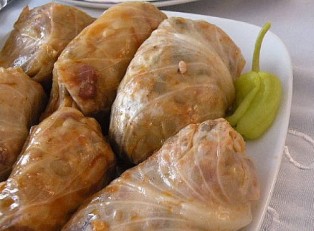
In old times, when Armenians were celebrating the New Year (Amanor), they would perceive the universal essence of the holiday, transition from the old to the new. However, the good old days are in the past, and the real significance of the holiday has not been preserved, the ethnographer Gohar Stepanyan told NEWS.am, sharing her concern.
“Ancient Armenians perceived the New Year as a transition to the new. The New Year was perceived as an end to chaos and creation of the universe. The holiday implied a way out of the original chaos, combination of various elements of the universe, which was reflected in the form of various dishes on New Year table. For example, pasutc dolma or sweet soup. The former was made of grains, and the latter of dried fruit and sweet ingredients. In short, ancient Armenians’ New Year holiday was viewed as a model comprising the entire universe,” the ethnographer said.
Meat products were totally absent from ancient Armenians’ New Year tables. “There was only vegetable food for the simple reason that the New Year overlapped the Christmas Fast,” Stepanyan said.
As regards the roots of the changes and modern-day traditions of celebrating the New Year with ham and other greasy food, she said: “I think the Soviet era played its role with its negative attitude to Christianity and church. On the other hand, as an ethnographer, I do not reserve the right to reprimand Armenians for their New Year tables full of ham and other heavy food. The point is that, while being heavy eaters and drinkers, Armenians are not dancing and merrymaking. It is not a problem of the New Year holidays alone. Rather it is because we have not a ‘full-fledged’ holiday system,” Stepanyan said.
She warns Armenians against turning green with envy of neighbors’ “groaning boards” and trying to “keep pace” with others.