make preferable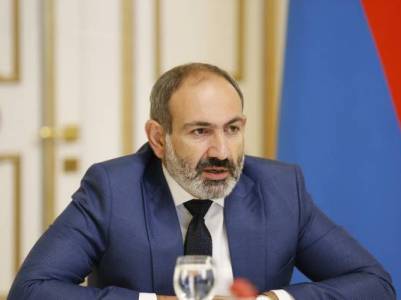
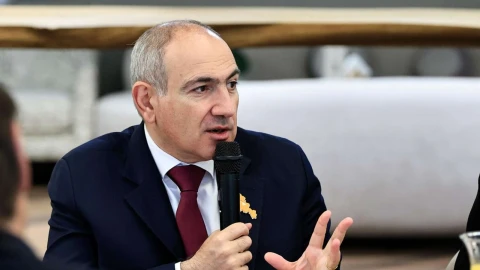
The revolution continues in Armenia, said Prime Minister Nikol Pashinyan, speaking to RFI (Radio France Internationale), according to Armenpress news agency.
“In general, revolutions are based on a choice: to stop at some moment, or to continue it. In Armenia’s case, it was the people who decided what I shall do. I realized that if I try to alone determine my future steps, I will appear before a risk of disappointing people. Today we continue the revolution. We have raised issues and are here to solve them,” Pashinyan said when asked how he feels himself in the role of a public official after the velvet revolution in the country.
Commenting on eliminating corruption in Armenia’s justice system, the PM stressed that the judges who take bribes will be punished with the ultimate gravity of the law, whereas non-corrupt officials will work freely and independently. He noted that during the past years, hundreds of thousands of sums of money have been directed for reforms in Armenia’s justice system. He added that the organizations which provided these sums say the work carried out was very effective, but they realize that there still are unresolved problems in the system.
The RFI reporter pointed out that nothing had changed in terms of women’s engagement in the new Armenian government, as solely two of the seventeen ministers are women. In response, PM Pashinyan said as follows: “During these days I have appointed four women as deputy ministers. Previously, no velvet revolution took place due to the passiveness of the two main forces: women and the youth. [But] the participation of women in these political processes was unprecedented. I am convinced that in coming years, the role of women will be more important in political processes.”
Reflecting on repatriation, the PM said the potential of Diaspora Armenians can be useful not only in the economic and cultural domains, but also in the public administration system. But, as per Pashinyan, there are legislative limitations. He added, however, that the increase of Diaspora Armenians’ engagement can be a step for considerable repatriation.
Also, PM Pashinyan reaffirmed his views that the change of power in Armenia has no international context, and the Armenian foreign policy vectors remain the same. “Our goal is to protect the national interests, the country’s sovereignty and independence,” he said. “Our foreign policy is neither pro-Western nor pro-Russian nor something else; we are pro-Armenian.”
As for the settlement of the Nagorno-Karabakh (Artsakh) conflict, the PM said even though Armenia is the guarantor of the security of Artsakh, this does not mean that it shall act instead of Artsakh in the negotiation process. Therefore, as per Pashinyan, it is important for Artsakh to be a full participant in the peace talks. “I believe the main obstacle before the conflict settlement is not so much the absence of a magic formula, but one of the parties’ absence from the negotiation processes. If Baku really wants the conflict to be settled, it should be interested in the return of Nagorno-Karabakh to the negotiating table.”