make preferable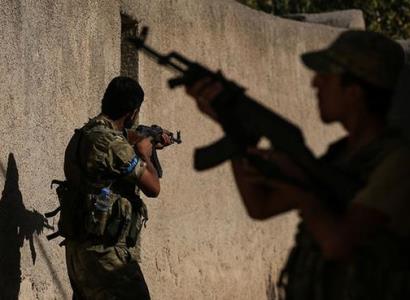
There is strong evidence that mercenaries and members of terrorist groups from the territory of Azerbaijan are violently taking part in armed attacks on the Armenian population in Artsakh [(Nagorno-Karabakh)]. Sargis Grigoryan of GPartners law firm has noted this in an article, which continues as follows:
The major players, Russia, France and have US continually said that thousands of foreign militants from “terrorist organisations” are joining the fighting in the conflict zone. Recently, the UN High Commissioner for Human Rights has warned of possible war crimes in Artsakh.
Also, Armenia and Artsakh are fighting against state-sponsored terrorism.
The time has come to make sanctions (in all forms) part of Armenia’ foreign and security policy. The Government of Armenia should immediately deploy an arsenal of sanctions which will certainly play an important role in dealing with Azerbaijan and other terrorist states. They will reduce Azerbaijan's economic welfare and thereby force that government’s regime to give in and abandon its genocidal policy against Artsakh. Armenia has an unprecedented opportunity to forge a new alliance with the major and other regional players to respond to the state-sponsored terrorism by imposing counter-terrorism international sanctions.
One of the most effective responses to the state sponsorship of terrorism is the sanction. Armenia can initiate an campaign to design and impose broad bilateral or multilateral sanctions on Azerbaijan and Turkey as terrorist-supporting countries by targeting their energy, defence and financial sectors. The sanctions will expose these countries’ key vulnerabilities - dependence on Western capital and advanced technology, with knock-on effects in other sectors.
Thus, the sanctions should directly target economic elites and major private assets (eg., International Bank of Azerbaijan, Synergy Group, MDI Azerbaijan, AtaBank), not only state officials and companies (SOFAZ, SOCAR, the Central Bank of Azerbaijan). Second, the sanction-imposing countries should deploy some of the most potent weapons in theirs sanctions arsenal, notably financial measures hitherto used against terrorist groups and transnational crime. Third, sanctions should be employed against Azerbaijan and Turkey to respond not only to aggression against Artsakh and Armenia but to a range of malign activity around the globe.
In international law, the states apply sanctions in the context of the Security Council resolutions No. 1267 and 1373 as tools against terrorism, however, there are sanctions which are adopted autonomously. The states have often imposed targeted financial sanctions, which can be designed to target specific persons, groups and entities responsible for the criminal policies or behaviour. Such sanctions comprise both an obligation to freeze all funds and economic resources of the targeted persons and entities and a prohibition on making funds or economic resources available directly or indirectly to or for the benefit of these persons and entities.
Importantly, Armenia and its allies (also working with international organisations eg., the Financial Action Task Force) should identify and impose sanctions on key sectors of the Azerbaijani and Turkish economies in order to deny their financial resources that may be used to fund and support terrorism and terrorist proxy networks, and malign regional influence. Moreover, Armenia and its allies should take the necessary measures to freeze all funds and assets of so called “Designated Parties”, and, no funds or economic resources may be provided to Designated Parties.