make preferable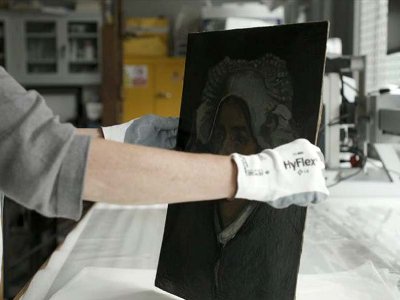
Employees of the National Gallery of Scotland were able to find previously unknown self-portrait of Vincent van Gogh - he was hidden on the back of his canvas "Peasant Woman's Head".
The new self-portrait will help researchers life and work of the great post-impressionist, Planet Today reported.
Hidden images under the famous paintings are then discovered by restorers. In today's world to make such discoveries has become easier thanks to the development of infrared and X-ray analysis, as well as the emergence of new imaging tools.
Experts at the National Gallery of Scotland in Edinburgh decided to study Vincent van Gogh's famous painting "Peasant Woman's Head," painted in 1885. Subjecting the canvas to X-ray analysis, the scientists noticed the outlines of a hidden image on the back side. Further analysis showed that this is a self-portrait of the artist.
The restorers believe that the hidden self-portrait was painted at a key period in van Gogh's artistic career, when he saw the works of the French Impressionists, having moved to Paris. Van Gogh was saving money during that period, so he reused the canvases by painting on the reverse side. After the artist's death, his Peasant Woman's Head was considered a more important work, so the self-portrait was covered with heavy paper.