make preferable
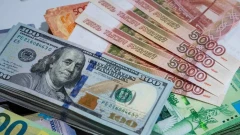
EU leaders across the continent are worried. Europe is struggling with record inflation, mostly because of energy prices that jumped sharply after the war in Ukraine, Politico writes.
Europeans fear exorbitant heating bills this winter. Some companies, from steel makers to fertilizer plants, have even shut down. The situation has become so dire that the European Central Bank on Thursday announced its largest interest rate hike in history and promised that further increases are coming as the bank tries to curb inflation, often called a tax on the poor.
While many Europeans enjoyed the summer sun, protests also spread across the bloc, from Spain to Germany. Last weekend in Prague, some 70,000 people took to the streets to demonstrate against the government, demanding action on rising energy prices and chanting against the EU and NATO.
The current energy crisis makes all political leaders nervous because they fear the political consequences, an EU official told POLITICO.
The Baltic diplomat predicted that Europe could face a new surge of populism if leaders fail to rein in spending. This may be the third wave of populism in recent times, he said, calling the 2008 financial crisis and the 2014 migration crisis the previous two waves. This time could be the worst and have unpredictable consequences. We believe that's exactly what Putin is seeking.
The leaders' worries underscore the possibility that rising prices could undermine public support for the war in Ukraine, raising the question for European leaders: are they willing to risk their jobs to save Ukraine's democracy? Hungary has already signed a new gas agreement with Russian energy giant Gazprom, and Bulgaria is considering a return to buying Russian gas, indicating the limits of European solidarity with Ukraine.
This Sunday's election in Sweden will be the first test of the political temperature in Europe, and EU officials are watching it closely.
With crime and cost-of-living issues at the center of the election campaign, Prime Minister Magdalena Andersson's center-left government could be in trouble. And the far-right party, the Swedish Democrats, which has neo-Nazi roots, has a real chance of becoming part of a right-wing government for the first time.
But the real concern is the Italian general election later this month. Georgia Meloni's far-rightist Brothers of Italy party is leading in the polls, raising expectations of a right-wing government in Rome.
Given the size of Italy's economy - the third largest in the EU - and its status as a founding member of the EU, the consequences of Meloni's premiership will be significant, even though most officials do not expect her to destroy her predecessor's economic plan.
But Meloni's ally, Matteo Salvini is openly promoting Russia-friendly positions. This week, he called on the EU to review its sanctions against Russia, prompting fears in Brussels that new measures against Russia would become more difficult if the Meloni-Salvini alliance came to power.
The possible populist wave is not limited to individual countries. Every European leader is under pressure from voters to rein in rising costs. That's one reason the European Commission this week decided to break with years of precedent and push for radical intervention in the bloc's energy markets.
European Commission President Ursula von der Leyen surprised many officials in Brussels by publicly outlining a comprehensive plan to rein in energy prices. The announcement was made before senior EU ambassadors had even been briefed. The main reason for the accelerated timetable: growing pressure from political leaders.
Belgian Prime Minister Alexander De Croo said bluntly over the weekend that if the European Commission does not intervene, we risk plunging into a deep recession with unpredictable consequences. This is much more than the economy. It is about the security and stability of the European continent.
Charles Michel, president of the European Council, which represents the position of EU members, also expressed alarm in an interview with European media last week. There is not a day to lose, he said, meaningfully stating that the Council has invited the Commission several times to make concrete proposals.
In the tangled world of energy politics, the Commission's decision to intervene in energy markets is a sharp U-turn.
The EU's executive body has refused for decades to intervene in European energy markets, a view shared by economically liberal countries such as Germany, the Netherlands and the Nordic members. But the sheer scale of economic pain experienced by citizens from Sweden to Portugal has forced countries that normally support the free market to change tactics and admit that intervention is necessary, though perhaps only temporarily.
Among von der Leyen's proposals are a price cap on Russian gas, a plan to take excess profits from non-gas producers of energy (who benefit from EU electricity prices) and a solidarity contribution from fossil fuels.
However, the final form of the bill is still being drafted, with energy ministers expected to give their initial verdict at an emergency meeting on Friday.
EU finance ministers will also meet to discuss the flip side of a major energy intervention - how to pay for it.
While the Commission's proposal would compensate hard-hit consumers and businesses through a levy on non-gas power producers, it remains unclear whether this approach would cover the huge costs involved.
The German government has already submitted a solid €65 billion compensation package for consumers and businesses; other eurozone countries are developing similar ways to soften the blow, preparing their national budgets, which ultimately require Brussels' approval.
Thus, Friday's meeting will focus heavily on defining the fiscal space available to finance ministers. EU finance officials are keeping a close eye on the eurozone's economic health amid worrisome signals of a possible recession. But the Commission is also well aware of the political pressure being exerted on EU leaders.
Meanwhile, Friday's meetings are probably just the first salvo in a high-tech - and political - economic battle. Resistance to von der Leyen's proposal is already building, and some officials are lowering expectations of any breakthrough on Friday. Others are more optimistic, hoping for at least signs of some political agreement on the horizon