make preferable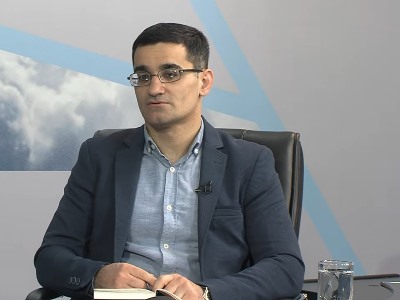
Political analyst Karen Igityan said at the presentation of the report "Negotiation Process on Nagorno-Karabakh" that Artsakh's independence in itself is already a concession on the Armenian side, because from the very beginning Artsakh and Armenia made a legal decision to join each other. This is also mentioned in the Declaration of Independence of Armenia.
According to him, the conflict started about 1000 years ago when the first Turks arrived and started to conquer the region.
He believes that there was no separate Artsakh conflict, Kars conflict, Nakhchivan problem and so on, this is a single Armenian-Turkish problem. The Turk who came sat on the Armenian land and little by little appropriated it for himself.
"Armenian-Turkish clashes took place not only in Artsakh, they took place from Yerevan to Baku. In all those places where Armenians and people, who later became Azerbaijanis, lived side by side, there were clashes in all those places. Given that Azerbaijan was created by Turkey, Azerbaijan perceived itself as a strong party, because Turkey stood behind Azerbaijan. Based on this, Azerbaijan negotiated uncompromisingly, while the Armenian authorities under the first president adopted a concessionary approach. The current Armenian authorities do the same. The first president of Armenia, having strengthened his power, immediately abandoned this idea, went to Zheleznovodsk and signed a communiqué there, where Artsakh was perceived as an internal affair of Azerbaijan. We see that in most cases everything depended on the position of Armenia itself," Igityan stressed.
Arsen Torosyan, a deputy from the Civil Contract party, asserting that there is and has never been any chance for Artsakh's independence recognition, according to his assessment, is completely untrue.
"After the change of power in 1998, the logic of the negotiations changed completely and there was a proposal from the OSCE mediators that Artsakh should not have vertical relations with Azerbaijan, which Baku rejected. The second was the Key West process by which Artsakh was supposed to join Armenia, which was also rejected. The international community was ready not only to talk about Artsakh's independence but also to recognize Artsakh as a part of Armenia.
Not to mention that the further negotiations were conducted according to the logic that Artsakh should get a status, and then a referendum should be held, which would decide the final status. Naturally, it was a question of independence," the political analyst explained.
According to Igityan's assessment, the approaches of Azerbaijan and Turkey towards Armenians are very similar to the approaches of German fascists towards Jews.