make preferable
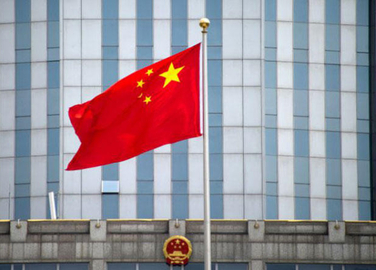
The anti-Chinese coalition of the so-called collective West, which Donald Trump began to build and Joe Biden continues to build today, has cracked in Germany, Kommersant columnist Sergei Strokan writes.
"The German chancellor, who had visited Beijing at the head of a delegation that included the entire flower of German business - Siemens, Adidas, Deutsche Bank, BASF, BioNTech, BMW, Volkswagen - briefly returned home to go to negotiations on November 13, now not with the Chinese, but with the Vietnamese Communists.
He'll fly to Singapore after that and the climax of Germany's Asian informal days is Olaf Scholz's participation in the G20 summit. There, he will once again be able to talk to Chinese President Xi Jinping.
While for Joe Biden, who keeps calling on Western allies to cut off China's roots, a possible meeting with Chinese President Xi Jinping in Bali was the subject of complicated diplomatic dances, for Olaf Scholz the question of whether to negotiate with Xi Jinping was not initially an issue.
Of course, to meet, to negotiate, to make big deals. Especially since Germany is still perceived as the informal leader of Europe and other EU members look up to it. One of the results of the trip to Beijing was the signing of an agreement by the Chinese company CASC with Airbus Concern for the purchase of 140 airliners worth $17 billion.
Russian experts, who after the start of the special operation in Ukraine argue that Germany and Europe as a whole have long been on their knees before Washington and have ceased to be a subject of world politics, will now have to adjust their position. It is with regard to Russia that the coalition of the West in the sanctions war persists. But China is a different story. They may be there in Europe on their knees to Washington, but as we can see, not only are they standing, but they are flying to negotiations.
Germany has good reason for such a revolt. The war of sanctions and support for Ukraine are costing the country more and more, and the threat of shutting down world-renowned industries, previously unthinkable, is becoming quite real. One has to survive somehow, and this is the task that the chancellor has to address. With the easy hand of the persecutor of German politicians, the former Ukrainian ambassador Melnyk, Olaf Scholz, called the offended liverwurst sausage, must feed the country not only with promises. And here liverwurst could become quite edible and appetizing along with Chinese garlic. If Berlin's main partner in the sanctions war is Washington, its main business partner is Beijing. Last year, for the sixth year in a row, China topped Germany's list of top trading partners, with bilateral trade up 15 percent compared to 2020.
In the first three quarters of this year, China accounted for 40% of Volkswagen's global shipments; China is the main market for Mercedes. The German chemical industry and the production of electrical equipment are tied to China. The list of Chinese roots goes on and on.
This means that while agreeing with the United States to call China the main strategic challenge to the West, Germany and Western Europe as a whole will link their business strategies to it.
Let's be happy for our Chinese comrades who saw the crack in Joe Biden's coalition. We, on the other hand, have yet to see such a crack in the West's anti-Russian coalition."
Location