make preferable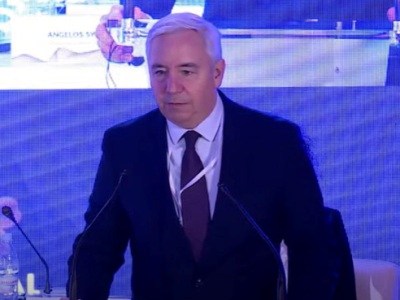
The UN Human Rights Council has several roles that are directly related to the topic of this forum, and it has more than 13 very serious mechanisms dedicated to reviewing human rights issues in various countries. Federico Villegas, President of the UN Human Rights Council and Permanent Representative of Argentina to the UN Office in Geneva, announced this Monday at the 4th Global Forum Against the Crime of Genocide being held in the Armenian capital, Yerevan.
"This year was a very difficult year for us. A war is going on in the heart of Europe, Covid is raging all over the world, climate change is getting worse. We should have spent time investigating the atrocities committed in Ukraine as a result of Russian aggression. Also, we launched a mechanism in Iran to find out the state of human rights [there]," said Villegas.
He noted that the universal idea of establishing human rights around the world goes beyond national and regional boundaries, and that the international community must collectively protect human rights.
Villegas added that the good news is that 70 percent of the resolutions of the UN Human Rights Council were approved by consensus, 40 percent—by voting—and that, in particular, the resolution submitted by Armenia on the prevention of genocides was also adopted by consensus.
"This gives us hope that this progressive development of new standards in human rights gives us security, gives us opportunities to continue this development. I hope that through these discussions we will be able to identify the ‘gray area’ between technology and genocide prevention. Genocide does not happen overnight. If we follow, there are 8 to 10 phases of genocide development. At any phase, one can intervene and prevent technology from being used for bad purposes," Federico Villegas emphasized.