make preferable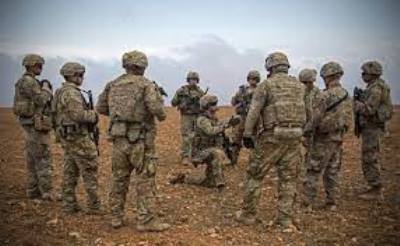
The U.S. military will have a "transformative" year in Asia in 2023, a senior Defense Department official said, continuing the Biden administration's efforts to counter what U.S. officials say is China's destabilizing influence on regional security, Insider writes.
The administration has spent its first two years working to strengthen U.S. relations in the Indo-Pacific region, but an expanded U.S. military presence is likely to face both logistical challenges and political sensitivities from countries that fear a negative reaction from their larger neighbor, China.
The Obama administration announced plans for a pivot to Asia in late 2011, but the shift was thwarted by wars in the Middle East and Europe, as well as the Trump administration's often hostile stance toward the region. Since taking office, the Biden administration has unveiled major initiatives to improve the U.S. diplomatic, economic and security presence in the Indo-Pacific region.
There will be notable changes next year, assured Ely Ratner, assistant secretary of defense for Indo-Pacific security.
It's no secret that the forward U.S. presence in the region has historically been predominantly in Northeast Asia, predominantly at major operating bases, Ratner said.
He added the administration agrees with calls for a more mobile, lethal and diversified posture in the region, but said that such changes require years of hard work by the government.
The U.S. and the Philippines also signed an Enhanced Defense Cooperation Agreement in 2014, allowing for increased U.S. troop deployments, although its implementation was delayed by tensions under President Rodrigo Duterte, who left office in June. These changes requiredyyears of really hard work on the part of U.S. officials, Ratner said, adding that such work continues, citing the AUKUS agreement with Australia and Britain, the recent agreement to accelerate and expand EDCA projects, and this month's announcement of plans to increase the U.S. military presence in Australia.
Sending more U.S. troops to the region cannot, by itself, lead to transformation, since many of them will likely not be there permanently, says Stacy Pettijohn, director of the defense program at the Center for a New American Security.
The National Defense Authorization Act of 2023 authorizes funding for military construction projects across the Pacific, including at major U.S. bases and smaller outposts such as Tinian in the Northern Mariana Islands, a U.S. territory.