make preferable
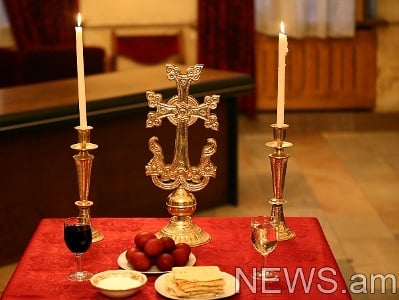
The Armenian Apostolic Church today, on the 9th of April, celebrates the Holy Resurrection of Christ.
The feast of the Holy Resurrection is also called Easter, which means liberation, deliverance from sins and return to God. Easter is considered one of the greatest feasts of the Old and New Testaments.
After the crucifixion and death of Jesus Christ, the pious followers removed His body from the cross and placed it in a coffin carved into the rock. The entrance to the tomb was closed with a large stone. Three days later, the Myrrh-bearing Women - Mary Magdalene, Salome and Mary, mother of James, came to the tomb to anoint the body of Christ with fragrant oils. However, coming closer, they saw that the entrance to the rock was open, and the tomb was empty. While they were perplexed, two men in shining robes appeared before them and said to them: “Why do you look for the living among the dead? He is not here; he has risen! ... ”(Luke 24:5-6). The Myrrh-bearing Women brought the news of the Resurrection to the apostles, after which Jesus appeared to them.
The resurrection of Jesus Christ became the foundation of Christian doctrine. “If there is no resurrection of the dead, then not even Christ has been raised. And if Christ has not been raised, our preaching is useless and so is your faith.” (1 Corinthians 15:13-14).
On Easter, believers paint eggs. The egg is a symbol of resurrection and the birth of new life. And the red color symbolizes the life-giving blood of crucified Christ, shed in the name of our salvation. Gregory of Tatev writes on egg-dyeing: “Only on Easter we dye eggs, because the egg symbolizes the Universe: the shell is like the sky, the film is like air, the protein is like water, and the yolk is the earth itself. The red color means that the world was saved at the cost of the blood of Jesus Christ. When we hold a red egg in our hands, we proclaim our salvation.”
The night before, the Holy Liturgy of Christmas Eve is served in the churches, and the Easter celebrations begin. On Sunday morning, the service of Easter Vigil is performed, the rite of consecration of the four cardinal directions (Andastan), then the Holy Liturgy is served.
The fifty-day period from Holy Easter (Holy Resurrection of Christ) to Pentecost (Whitsun) in the Armenian Apostolic Church is called Hinunk, comes from the word "fifty". It is dedicated to the sacrament of the Resurrection and Ascension of Jesus Christ, so this entire period is the Lord's. Hinunk ends with the feast of Pentecost. According to church canons, there are no fast days in this period, and all kinds of food can be consumed.