make preferable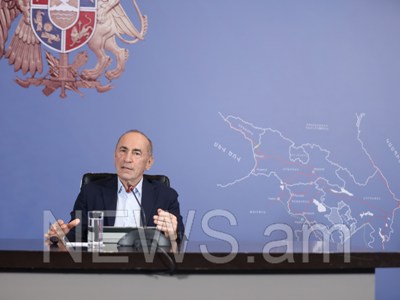
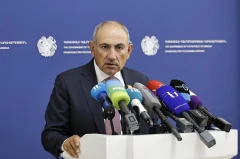
The Armenian authorities can theoretically achieve peace with Azerbaijan. But in practice, it is impossible to achieve peace with the current format of negotiations. This was stated by the second President of Armenia, Robert Kocharyan, during his press conference Monday.
According to him, Armenia's main mistake is that it negotiates with Azerbaijan without mediators, and therefore there will be no guarantors in the form of a country or a union of countries.
Kocharyan noted that no document has ever prevented any war, explaining that negotiations, documents and guarantees are necessary to prevent a war, especially considering the fact that Armenia and Azerbaijan are currently in unequal conditions.
The second president of Armenia called the best guarantor the presence of an army and such opportunities that would significantly guarantee peace.
In his words, wars do not start often because they can be difficult for those who start them.
"Armenia should not have brought the treaty process to the current point. They [i.e. the Armenian authorities] need some kind of paper to wave in order to declare that as if they have brought peace. In this case, the main thing is that the word ‘peace’ is there, but the content is not essential. Many do not read the content, but are guided by the headlines—and [Armenian PM] Nikol Pashinyan knows this very well,” the second president of Armenia noted, in particular. .
Kocharyan said that Pashinyan has created a deadlock and wants to sell it as the Crossroads of Peace initiative of the Armenian government, and the title is good.
“When [i.e., Pashinyan] he attempts to show it to people who understand it, they ask in surprise: ‘What? Is he making fools of us?’ If this is how you preach, then I can understand it. But when you do this during a meeting with representatives of major countries, it is disrespectful towards these people,” Kocharyan added.
The former president of Armenia did not rule out that the peace treaty may be signed, but the peace will not last because there is no deterrent mechanism for who can violate these agreements.