make preferable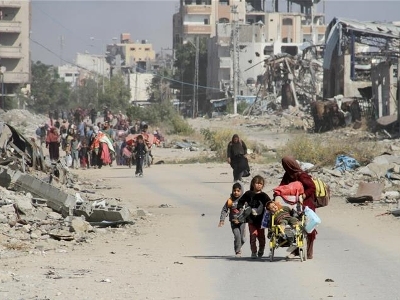
The foreign ministers of Germany and Austria have expressed concern over Israeli Defense Minister Benny Gantz's plan to relocate displaced Palestinians to a so-called closed zone, Politico reports.
“I share this concern about these Israeli plans or statements regarding the permanent occupation and expulsion of the Palestinian population from part of Gaza,” Austrian Foreign Minister Beate Mainl-Reisinger said, speaking alongside her German and Israeli counterparts. “From Austria's point of view, Gaza must remain Palestinian, and this is also the subject of our negotiations: we have repeatedly emphasized that Israel is bound by international law in its legitimate fight against terrorism.”
German Foreign Minister Johann Wazepule, responding to a question about Israel's plan, stressed the importance of achieving a ceasefire in Gaza that would rule out “other developments that really cause us concern.”
Israeli Defense Minister Israel Katz told reporters earlier this week about his plan to relocate some 600,000 displaced Palestinians inside a closed area in Gaza, according to media reports. The defense minister said that the entire population of Gaza, numbering more than 2 million people, would eventually be relocated to the area, which he reportedly called a “humanitarian city.”
Germany and Austria remain among Israel's closest allies in Europe, but it is unclear whether their criticism will influence the Israeli government's position.
Israeli Foreign Minister Gideon Saar defended the defense minister's idea, saying the zone would be created to protect civilians and ruled out the possibility of forcibly expelling Palestinians from Gaza.
“Everything, even this idea that has been mentioned, is within the context of international law and the evacuation of people for their own safety from places that are effectively battlefields,” he said.
Saar also said that an agreement to achieve a ceasefire and the release of Israeli hostages in Gaza was “achievable” within the framework of ongoing talks in Doha.
“If a temporary ceasefire is achieved, we will negotiate a permanent ceasefire,” he added.
His Austrian and German counterparts also expressed optimism about a possible ceasefire, with Mainl-Reisinger calling the current talks a “historic chance” and a “window of opportunity” to achieve peace and stability in the entire region.
The foreign ministers also announced that they had established a new format for meetings in the trio format, called the “Vienna Trilogue,” and agreed to meet again in Berlin.