make preferable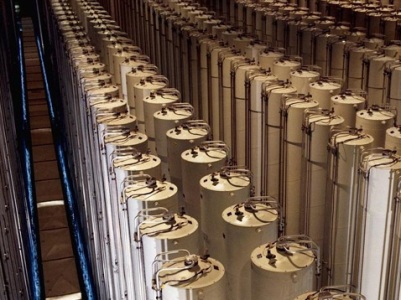
Israeli authorities believe that enriched uranium reserves, deeply hidden at one of Iran's nuclear facilities that was hit by US air strikes, could potentially be extracted, a senior Israeli official told AP on condition of anonymity.
Against this backdrop, the US confirmed that experts from the Defense Threat Reduction Agency (DTRA), which developed special “bunker buster” bombs, have not yet received all the data to assess whether these munitions hit their targets at other Iranian sites.
President Donald Trump previously said that the strikes “completely destroyed” three Iranian nuclear facilities. However, initial assessments by the Pentagon and international observers were more cautious: according to the US Defense Intelligence Agency, the strikes caused serious damage to the Fordow, Natanz, and Isfahan facilities, but did not completely destroy them.
According to CIA Director John Ratcliffe, the US strikes destroyed Iran's only metal conversion facility, setting the nuclear program back by years. However, according to preliminary intelligence reports, significant stocks of enriched uranium may still remain under the rubble in Fordow and Isfahan.
“Most of the enriched uranium is likely still deep under the rubble at the Isfahan facility. It will be very difficult to retrieve, but technically possible,” said an Israeli official.
Meanwhile, experts warn that Iran may have moved some of its stockpiles to safer locations in anticipation of Israeli strikes and possible US involvement.
Two representatives of the US Threat Reduction Agency admitted that they are still waiting for data on whether the Massive Ordnance Penetrators dropped were able to reach the depths for which they were designed. This data is currently classified.
Iranian President Masoud Pezeshkiyan said in an interview with American journalist Tucker Carlson that the US strikes had caused serious damage to the country's nuclear facilities and that Iranian experts were still unable to fully assess the extent of the damage. Pezeshkiyan added that Iran is ready to resume cooperation with the International Atomic Energy Agency (IAEA), but cannot yet guarantee full access to inspectors.
IAEA chief Rafael Grossi confirmed that three key Iranian uranium enrichment and conversion facilities “were seriously damaged,” but stressed that the possibility of resuming production still remains. “To be honest, it cannot be said that everything has disappeared without a trace,” he said.