make preferable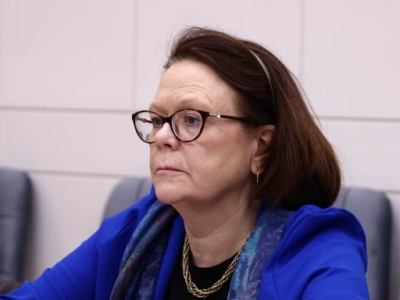
It was the decision of the governments of Armenia and Azerbaijan, and the Organization for Security and Cooperation in Europe (OSCE) happily followed it. This was stated by Finnish ambassador to Armenia Kirsti Narinen in an interview with Armenian News-NEWS.am Monday on the sidelines of the Comprehensive Security & Resilience International Conference – 2025 that kicked off Monday in Armenia’s capital, Yerevan—and referring to the dissolution of the OSCE Minsk Group.
When asked what international mechanisms, in her opinion, can ensure the rights of the displaced Armenians of Artsakh (Nagorno-Karabakh), she replied that in her view, the Minsk Group was an organization that had not been functioning for a long time, it simply existed, but in practice, frankly speaking, it could not be used as a tool for anything.
As for the displaced people of Nagorno-Karabakh, Narinen expressed a view that the best thing one can do is assist Armenia in building its resilience, its prosperity, and creating economic, political, and social opportunities for these people to resettle and find their lives in the country. And if it’s about the long-term perspective, that is impossible to judge at this time.
As for how close peace is in the region, can Armenia and Azerbaijan establish peace once and for all, the ambassador responded by saying absolutely. The Finnish Nobel Peace Prize laureate said that peace is a matter of will. So if there is a will to have peace and reconciliation between two peoples and states, it is certainly possible. It is just that it will take time, effort, maybe a little longer than we think, to build fibers, then maybe threads, and then ropes to create connections between the two peoples.
At this point, the heads of state have met, and connections are being established at other levels, but now we need the next phase: for people to feel that they can trust each other, and that they can communicate and cooperate with each other; but that is not a quick process, Kirsti Narinen concluded.