make preferable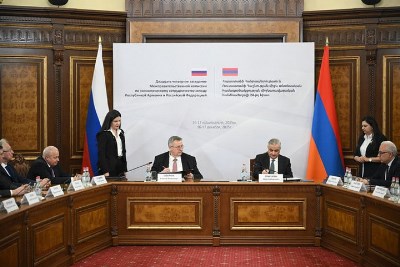
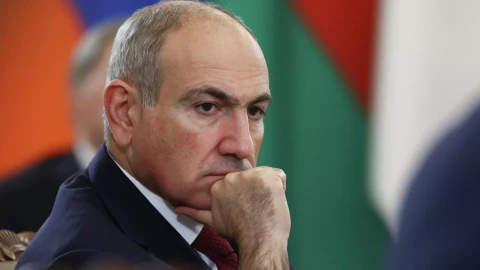
Past daily of Armenia writes as follows, in particular: The visit to Armenia yesterday by Russian Deputy Prime Minister Alexey Overchuk has already generated a wide response in political circles and the expert community. During his regular visits to Yerevan, the senior Russian official for the first time did not meet with the person holding the office of [Armenia’s] prime minister, Nikol Pashinyan.
This fact in itself is symbolic and, as observers note, reflects Moscow’s initiative to demonstrate that the format of communication with the Armenian authorities is changing. According to information circulating in expert and diplomatic circles, the absence of a meeting with Pashinyan is interpreted as a manifestation of cooling relations between Moscow and Armenia’s current authorities.
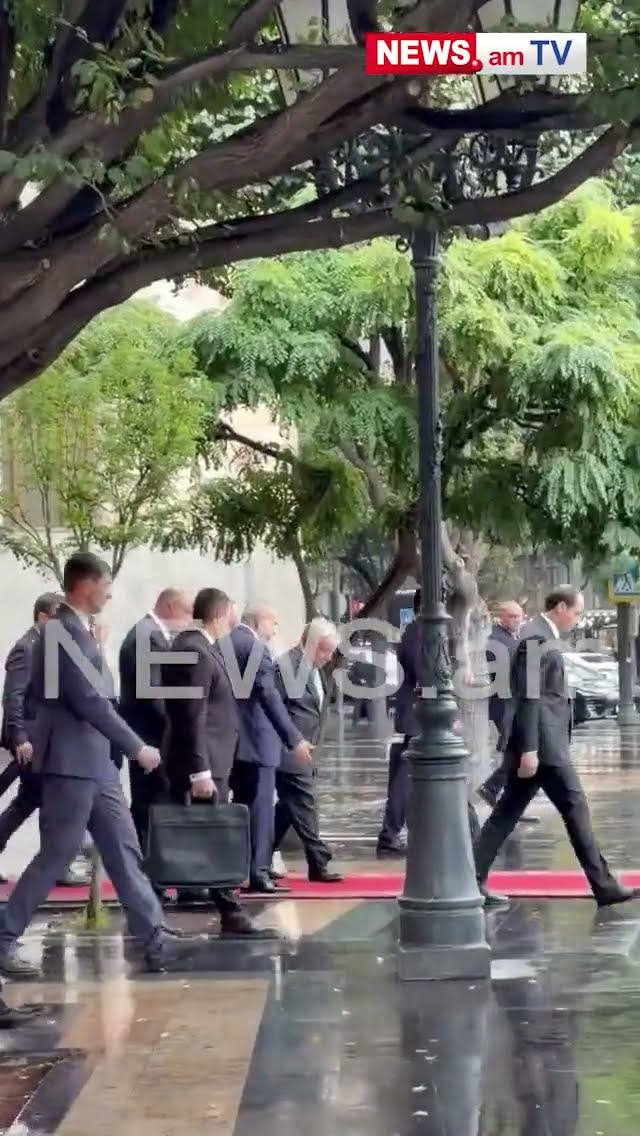
At the same time, it is important to emphasize that it concerns the [Armenian] authorities, not the people. The Russian side, according to sources, is trying to show that its criticism and dissatisfaction relate to specific administrative decisions by Yerevan, but are absolutely not directed against Armenian society. It is noteworthy that Overchuk was accompanied by a fairly large Russian delegation. It included deputy ministers from various agencies, which indicates the seriousness of Moscow’s intentions.
The task of the delegation was to discuss bilateral issues at the ministerial level, bypassing political statements and focusing on practical cooperation. This format demonstrates Russia’s aspiration for systemic work—even under conditions of a freeze in political dialogue. According to unofficial information, during the visit special attention was paid to issues that had previously been agreed between Armenia’s MFA [i.e. Ministry of Foreign Affairs] and Russian partners. Sources claim that of the fifteen adopted points, the Armenian side has implemented only one. Diplomatic circles also note that this fact no longer goes unnoticed.
According to the same information, Moscow has made it clear that [its] patience is running out and that ignoring agreements is unacceptable. For example, for several years the Armenian side has, for various reasons, been blocking the opening of a [Russian] consulate general in [Armenia’s southern] Kapan [city]. The Russian delegation, according to reports, has emphasized the need to fulfill obligations, since the effectiveness of bilateral cooperation depends precisely on this.
Thus, Overchuk’s visit [to Armenia] became not only a working trip, but also an important political signal. Moscow shows readiness to continue cooperation with Armenia, but at the same time changes the emphases. Dialogue with the [Armenian] people remains friendly, while strict demands are presented to the [Armenian] authorities.
The absence of a meeting with Pashinyan is not an accident, but an initiative that should emphasize the seriousness of the situation. And what conclusions should Armenia’s current authorities draw? For them, this visit should become an occasion for reinterpretation. Yerevan faces the need to fulfill its obligations and prove its readiness for constructive cooperation with Russian partners. Otherwise, the freeze may grow into a deeper crisis, the consequences of which will be felt not only in politics, but also in the economy and security sectors.