make preferable
In 2025, there has already been growth in instances of foreign interference into Armenia’s domestic affairs. This is stated in the “Hybrid Threats” section of the 2026 report on Armenia’s external risks published by the Foreign Intelligence Service of Armenia.
The report adds as follows, in particular: " The referenced toolkit includes both activation of a network of agents operating in Armenia and supported groups, and activities directed at the cultivation of new political forces in Armenia’s domestic arena (political engineering).
One of the hybrid activities aimed at causing internal instability is the cultivation of seemingly “home-grown” political activity, its financing through different means, as well as its information support and organization. Projects targeting youth and activist groups, exploiting and manipulating their political views and patriotic feelings are implemented with the purpose of subsequently using the groups to achieve the goals of foreign actors. Under the guise of public diplomacy, education, sports and educational events, activities related to ideological preparation and recruitment are organized, which make the targeted groups often unwittingly become part of a larger foreign interference scheme.
In terms of cultivation and use of various actors in the pre-election period, businessmen, religious and cultural figures, as well as elements of organized crime that are directly or indirectly linked to decision-making circles of a foreign country, play a special role.
These actors can be engaged in the preelection and post-election stages, as well as on the voting day in order to organize sabotage activities under the guise of acts of public disobedience.
The objective of such activities is to undermine Armenia’s resistance, devitalise the democratic order by delegitimising or effectively diminishing the legitimacy of free, fair and transparent elections, and, if successful, also forming a government receptive to influence that contradicts Armenia’s interests and is “convenient” for foreign actors.
d․ Economic and Energy Pressure
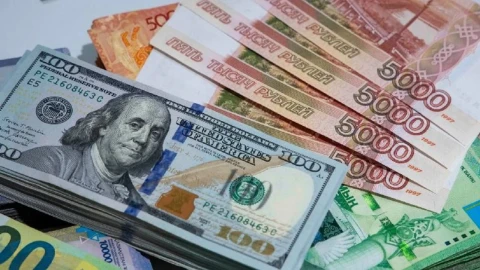
Considering the structure and the primary directions of imports and exports of goods from the Republic of Armenia, in 2025 we have observed seemingly objective, but in reality artificially created barriers (including through non-state actors) that range from confiscation of goods to criminal cases against exporters, mass arrests of exporting technical staff, deportations, and others. The purpose of these measures is to cause discontent among voters engaged in business activities and swaying their votes. This trend has been recorded in 2025 and will highly likely persist in 2026.
The energy sector, while unlikely, can be an effective area of hybrid activities, if a decision is made to escalate the pressure on Armenia.
Changes in migration regulations and their selective application are also likely to be used as part of the hybrid toolkit against migrants with Armenian citizenship. This also pursues the goal of generating dissatisfaction with the government and affecting votes.
e. Other Forms of Pressure
As yet another example of influence operations, in 2026 there may be continued targeting of high-level officials from Armenia’s executive and legislative bodies and their family members, as well as of new defamatory campaigns against them. Simultaneously, there may be promotion of political and other figures viewed as favorable by the targeting side․
The fact that Armenia is going to host large reputable events in 2026 makes it likely that actors using a hybrid toolkit will try to undermine Armenia’s international standing as an organizer of events of an international scale."