make preferable
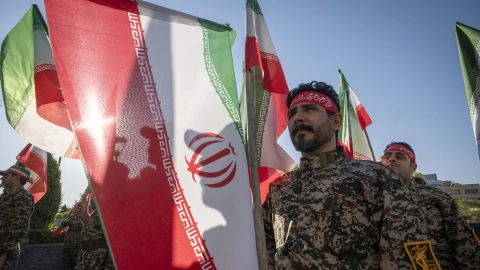
The political deputy commander of the Islamic Revolutionary Guard Corps (IRGC) navy said that Iran’s neighboring countries have been officially informed that Iran considers them friendly states, but if their land, air or territorial waters are used against the Islamic Republic, they will be considered hostile.
As per Mohammad Akbarzadeh, the respective response of Iran’s neighbors in this regard has been positive, and they have conveyed these concerns to the US and Israel.
The deputy commander of the IRGC navy noted that "if a conflict is forced, Iran's response will be tougher and more decisive than ever."
Akbarzadeh added that Iran's defense readiness, particularly in air defense, is at an extremely high level.
According to him, all high-ranking military and political leaders of Iran share the same view: if a war breaks out, Iran will not retreat even a millimeter, and its movement will be solely forward.
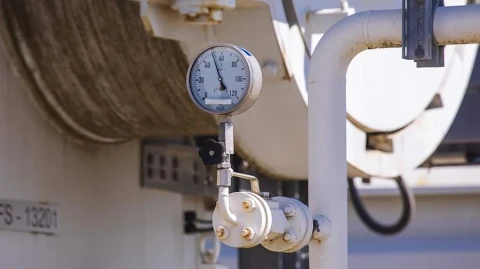
Speaking about the strategic importance of the Strait of Hormuz, Akbarzadeh noted that the management of this region has gone beyond the scope of traditional methods and has become completely intellectualized.
He informed that Iran receives data in real time from the "underwater, surface, and airspace" of the strait, and this enables the country to accurately determine which ships and under which flag have the right to pass through this strait and which do not.
Akbarzadeh added that Iran is not interested in harming the global economy, but does not intend to allow the US and its allies to get profits from the war they have unleashed.
Akbarzadeh emphasized that if until now the food security, energy, and trade of these countries have been ensured through this route, now Iran can turn this security into a factor of instability.
In conclusion, he noted that in addition to the already announced capabilities, Iran has other means that will be announced at the appropriate time.