make preferable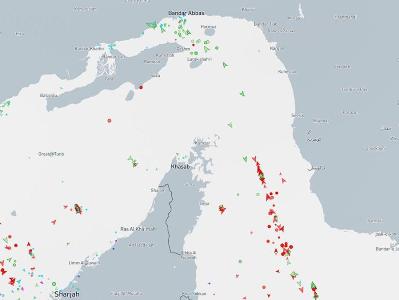
At least six vessels have passed through the Strait of Hormuz over the past several days, most of which either disabled their tracking systems or attempted to conceal their actual positions, CNN reports, citing MarineTraffic data.
The vessels — including three bulk carriers, a crude oil tanker, and two oil and chemical tankers — transited the strait from March 6. Hormuz is a key energy transport route, handling around a fifth of global oil trade. Since the start of the war, the strait has been effectively closed following warnings from the Iranian military that any vessel passing through would be attacked.
Among the vessels identified by CNN and MarineTraffic is the Iranian oil and chemical tanker Dalia, which is under US Treasury and EU sanctions. The vessel stopped transmitting Automatic Identification System (AIS) data on March 8 as it approached the strait from Iran's eastern side, reappearing on MarineTraffic on March 10 after transiting the strait and docking at Bandar Imam Khomeini port in Iran on March 11.
A similar tactic was used by the Liberian-flagged tanker Shenlong, which arrived in Mumbai, India on March 11, and the Jordanian-flagged bulk carrier KSL Hengyang heading to Singapore.
Some vessels, such as the Palauan-flagged tanker Parimal, followed the normal route through the strait until March 7, when their navigation was disrupted by GPS interference, MarineTraffic data shows.
Additionally, other ships near the strait have begun broadcasting messages apparently intended to signal to Iran not to attack them, listing destination field messages such as "CHINAOWNERALLCHINESE" and "CHINA OWNER&CREW" to indicate Chinese ownership and crew.