make preferable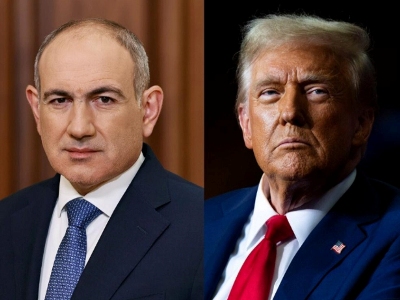
US President Donald Trump will host a signing ceremony Friday at the White House for a peace agreement between Armenia and Azerbaijan, alongside the leaders of those countries, Axios reports.
The deal is one of Trump's most significant foreign policy achievements so far and could help end one of the world's longest-running conflicts.
It's another chance for Trump—who described Friday's gathering as a "Historic Peace Summit"—to portray himself as the global peacemaker-in-chief.
The US-brokered agreement is intended to ensure peace, but also has a significant economic component.
Armenia has agreed to allow a 43.5-km corridor through its territory—to be developed by the US and named the "Trump Route for International Peace and Prosperity"—linking the bulk of Azerbaijan to a small Azerbaijani enclave on the Turkish border.
The corridor would allow people and goods to travel between Turkey and Azerbaijan and beyond to Central Asia without passing through Iran or Russia. That's not currently possible because the Armenia-Azerbaijan border is closed and highly fortified.
Iran strongly opposes the project, and Russia has also criticized it, while Turkey is strongly in favor. Both countries are former Soviet Republics, but have had strained ties with Moscow in recent years.
By unblocking this issue Americans are going to benefit in billions of dollars of new trade annually. Russia and Iran and China lose influence in a part of the world they considered their own domain.
Armenia dropped its own longstanding opposition to the corridor during talks with the US
The Trump administration's involvement in the conflict started in March when White House special envoy Steve Witkoff traveled from Moscow on a surprise visit to Baku.
The US official said Witkoff made the trip at the request of the Qatari government, which encouraged him to try to get a deal.
After the trip, Witkoff tasked Aryeh Lightstone, a special government employee on his team, with leading the diplomatic efforts, the US official said. Lightstone made five trips to the region for talks with the parties.
The Trump administration pitched Armenian Prime Minister Nikol Pashinyan on the idea that by agreeing to allow the US to develop the transit corridor, he would be gaining a friend in Washington—and a powerful buffer against any future invasions by Azerbaijan.
The low-profile talks will now turn into a very public agreement. On Friday, Trump will host Pashinyan and Azeri President Ilham Aliyev at the White House to sign it.
Trump wrote on Truth Social that he was "very proud of these courageous leaders for doing the right thing" for their people.
"This deal is opening Armenia to the world. Instead of relying on Iran they will have now the US as a key partner," the US official said.
The official argued that it was "very Trumpian" to approach the issue through trade and not through "the lens of someone else's conflict," adding that now "Russia and Iran and China lose influence in a part of the world they considered their own domain."
"This deal creates an irreversible path for normalization between the countries under the auspices of the Trump administration," the US official contended.
The official said that at least at the beginning the peace agreement will be mainly between the governments, but the hope is that over time it will help create a more "warm peace" between the people on both sides of the border.
"Peace is not finalized there is still more work to do. But the issues and steps to overcome them are outlined," the official said.