make preferable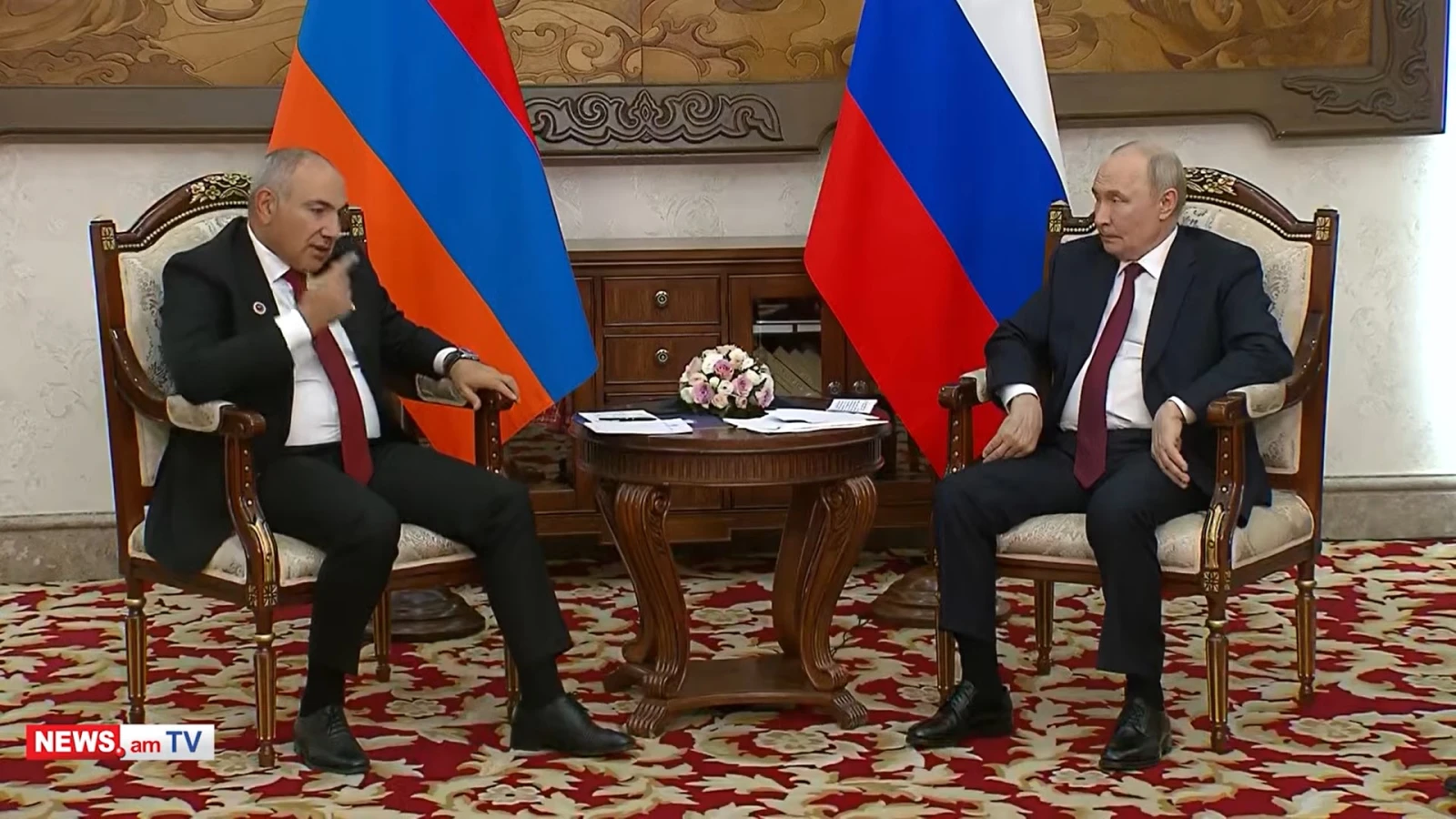
Armenia’s passing of the law on starting the procedure for joining the European Union (EU) actually means a declaration of withdrawal from the Eurasian Economic Union (EAEU), since simultaneous membership in these two economic unions is impossible, Russian President Vladimir Putin has stated.
Armenian Prime Minister Nikol Pashinyan, in turn, noted that the time for making a final choice for Armenia on the matter has not yet come, since a real alternative to the EAEU has not yet been created for the country.
This exchange of views took place during the talk between the two leaders on the sidelines of the Shanghai Cooperation Organization summit in Bishkek, the capital of Kyrgyzstan.
Putin, addressing Pashinyan, noted that the Russian side does not agree with Yerevan's interpretation that its passing of the law on starting the procedure for joining the EU does not mean a decision to withdraw from the EAEU.
As per Putin, Moscow views the very fact of passing the law on starting the procedure for Armenia’s joining another economic organization as a declaration of withdrawal from the EAEU.
“You said that you did not declare [Armenia’s] withdrawal [from the EAEU]. Passing the law on starting the procedure for joining another economic organization essentially means a declaration of withdrawal from our organization, because both being there and being there are incompatible; this is the problem,” Putin said, addressing Pashinyan.
Also, the Russian leader suggested continuing the discussion of the issue during the talk.
Pashinyan, in response, stated that the Armenian authorities recognize the need to make a specific choice in the future, but, according to him, the appropriate moment for this has not yet come.
“I have said publicly that the time will come when it will be necessary [for Armenia] to make a very specific choice. It is simply that our position is that at the moment that time has not yet come,” the Armenian premier said.
Pashinyan explained this by saying that Armenia does not yet have a real alternative to its current format of economic integration.
“Because in fact we do not have an alternative now. That alternative has not actually been created,” he said.
According to the Armenian prime minister, if such an alternative is formed in the future, Armenia will be able to make a final decision on its future direction, and, moreover, the method of making this decision has not yet been determined either.
“When it is created, if it is created, then, of course, we will make the choice—through a referendum or without it. Well, there are also such options,” Pashinyan said.
He suggested continuing the discussion of this topic with the Russian president and answering the questions that arise.
Putin, in turn, agreed that the final decision should remain with the Armenian people, but called on Yerevan to give them the opportunity to make such a choice.
“I agree with the idea that people should always have a choice. Well, then make it, and let’s close the topic. Period,” the Russian president said.
Also, Putin called the simplest option a direct appeal to the population.
“The simplest is to turn to people and ask: ‘What do you want?’ This way or that way? And that’s it,” he said.