make preferable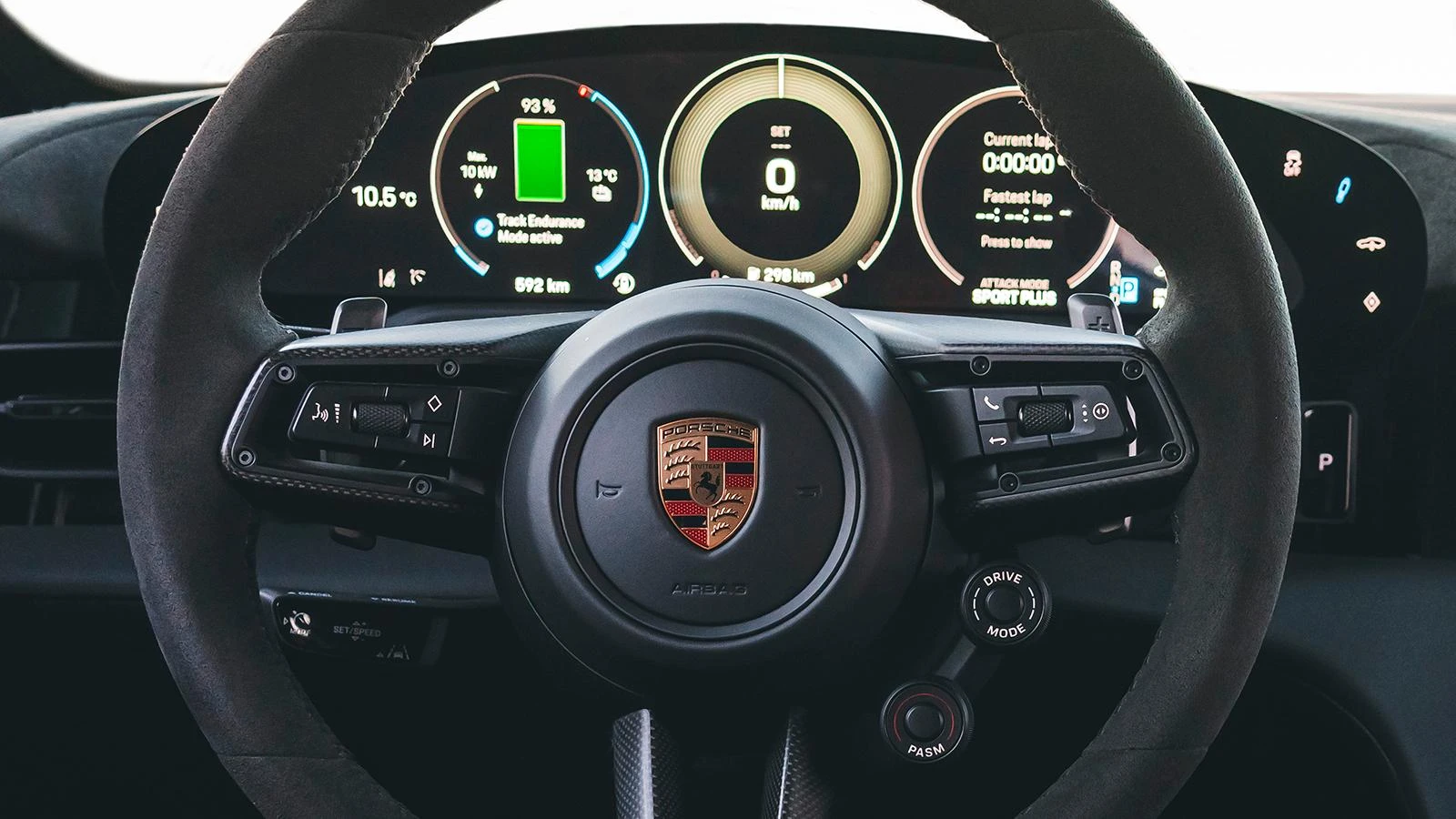
The emergence of electric cars has caused an unexpected turn in the automotive industry: manufacturers have begun to transfer elements that drivers are familiar with primarily from virtual games to real cars, Autocar reports.
We are talking about artificial gearboxes, which are designed to make electric cars livelier and bring the feeling of driving them closer to sports cars with internal combustion engines. One of the first to use this approach was Hyundai in its Ioniq 5 N, which received the N e-Shift system.
The company actually admitted that it is difficult for an electric engine to compete with a powerful engine and a manual gearbox in terms of emotional impact. Porsche uses a similar trick in the Taycan E-Shift system, and BMW intends to use this technology in its electric M3—expected in 2027.
The reason for the popularity of artificial transmissions becomes more understandable if we recall the history of automobile gearboxes. In the era of internal combustion engines, drivers had to choose between manual and traditional automatic gearboxes with torque converters, which, due to their slow and not always clear shifts, were nicknamed “slush boxes”—literally “a box of liquid porridge”.
A manual gearbox was not just a technical device, but part of the character of the car. The precision of the gear lever, the effort, the speed and smoothness of the shift, and the length of the stroke were important.
For many drivers, it was these sensations that determined the quality of interaction with the car. Then, in the late 1980s, Ferrari first introduced a semi-automatic gearbox to Formula 1, and the technology quickly became desirable for road cars. In 1996, BMW introduced the SMG, a sequential mechanized gearbox, on the E36-generation M3, and a year later Ferrari installed the F1 system on the F355.
Alfa Romeo soon offered a similar transmission, the Selespeed. Such gearboxes were automated manual gearboxes with a single clutch. During the shift, the flow of torque was interrupted, and the transmission speed was limited by the need to synchronize the gears. In racing sequential boxes, it was possible to do without synchronizers, which enabled shifting in milliseconds, but was accompanied by a lot of noise and rapid wear.
The next phase was the preselective gearboxes with two clutches. The Hot Shift concept was developed back in 1980 by the British Automotive Products, and Porsche began using PDK in motorsport in the mid-1980s. Later, similar transmissions received names such as DSG, PDK, and others.
The principle of their operation is relatively simple: while the car is moving in one gear, the next one is already engaged in advance. During the shift, one clutch opens and the second closes, so the transmission of torque is practically uninterrupted. It seemed that this was exactly how an improved means of accelerating the car was found.
But the real technological breakthrough was brought by the electric engine: such an electric engine is able to transmit torque practically continuously, without the need to change gears at all. And here a paradox arises. What automotive technology has been trying to get rid of for decades is now returning to electric cars—already in digital form.
Artificial gears are not necessary for the electric engine from a technical point of view; they are necessary for the driver. It's possible that the brief dips in throttle response, the sound of the engine, and the feel of shifting gears give the brain what it lacks in the rapid but virtually seamless acceleration of an electric car. It turns out that the car of the future could consciously emulate the shortcomings of past technology simply because driving without them might seem less exciting.