Preferred
Domestic policy
This week a number of top-ranking officials and the government agencies headed by them have had to refute the media reports on their resignation. A number of opposition newspapers published articles on an imminent government reshuffle. Some of the officials have hurried to refute the reports. Chief of the RA Police Alik Sargsyan flatly refuted the report and accounted for them by the “crafty designs” by those seeking to replace him. Mr. Sargsyan’s arguments, however, seem to be plausible — Chief of the RA Military Police Vladimir Gasparyan’s desire to become Chief of the RA Police has continuously been talked about for the last three years. The press service of the RA Ministry of Nature Protection flatly refuted the reports on the minister’s resignation. RA Ombudsman Armen Harutyunyan stated that his agreeing to fill the post of RA Prosecutor General would mean bringing all his previous work to nothing. We find it difficult to make any forecasts about accuracy of media reports now, but experience shows they are not too far from the truth – at least in part.
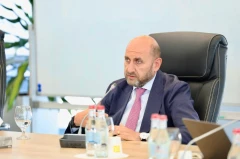
At his meeting with journalists, Armen Harutyunyan addressed the tragic consequences of post-election processes in March 2008. According to him, one has to “try hard” to see the Armenian authorities’ political will to deal with them. “If I want to see this political will very much, I can see some of its manifestations. In this case, however, I will turn into a pro-governmental political figure,” Harutyunyan said. He pointed out that the Armenian authorities should not “feel hurt” by international agencies’ strongly-worded resolutions, as they have not so far answered numerous questions concerning the 2008 post-election processes.
The Yerkrapah volunteer union, which does not consider itself a political organization, is likely to finally decide on its political preferences soon. On the threshold of Yerkrapah’s regular congress scheduled for February 16, the Yerkrapah leader Manvel Grigoryan’s return to the government camp is being much talked about. Although Yerkrapah does not admit the fact that, as a result of Manvel Grigoryan’s actions coordinated with President Serzh Sargsyan, persons holding opposite views may become Yerkapah Board members, General Grigoryan, for more than a year and a half, has been “expressing his loyalty” to the authorities, and “showing tolerance” to a number of his companions-in-arms being under arrest. It should be noted that Manvel Grigoryan had never made open statements in the Opposition’s favor, but, during the 2003 and 2008 presidential elections, many of the Yerkrapah members supported the opposition candidates, Stepan Demirchyan and Levon Ter-Petrosyan respectively. The disagreements between General Grigoryan and the Armenian authorities during the most crucial phase of the 2008 presidential campaign resulted in his being “granted a leave” and later relieved of the post of RA Deputy Minister of Defense. Now, however, we can expect fundamental disagreements between the two wings of Yerkrapah, the radical opposition and soft liners.
Nagorno-Karabakh peace process and region
This week has been an eventful one with respect to the Armenian-Turkish reconciliation. Despite the statements that “the ball is in the Turkish part of the field,” made in Yerevan, the Armenian authorities took a number of steps.
Armenian President Serzh Sargsyan has taken advantage of his three-day visit to Great Britain to give new impetus to the Armenian-Turkish normalization process. The Armenian leader addressed an open letter to his Turkish counterpart and later delivered a lengthy speech at the Royal Institute of International Affairs, Chatham House, in London. He made a number of all-important statements. Part of the Armenian President’s speech must have been addressed to the Armenian people – Serzh Sargsyan thus reaffirmed his commitment to the policy of normalizing relations with Turkey. The Armenian leader once more made it clear to his opponents in Armenia and in the Diaspora that he has no intention to revise his foreign policy. “If the clock of history could be turned back, I would have initiated the process again,” Serzh Sargsyan said.
As regards his decisive steps to ensure progress in the Armenian-Turkish reconciliation process, Serzh Sargsyan made a second step during the last few days – standing on a high platform in London he announced his intention to send the Armenian-Turkish protocols to Parliament for ratification. Speaking in behalf of the parliamentary majority led by him, the Armenian President expressed the confidence that the Armenian Parliament would certainly ratify the documents. He asked a pertinent question: “We should ask Turkey if it is ready to continue the process.” Speaking of the absence of any preconditions in the Armenian-Turkish protocols and expressing surprise at official Ankara hysteria over the RA Constitutional Court’s verdict, the Armenian leader clarified the Armenian authorities’ position on the Armenian Genocide: “There are no preconditions. If Turkey thinks we will give up the Armenian Genocide problem or agree to unacceptable concessions on Nagorno-Karabakh – we did not promise that.”
Official Yerevan’s constructive position, particularly its foreign policy in harmony with the new geopolitical processes in the region, makes top-ranking Turkish officials show inconsistency in their positions. Early this week, Turkish Foreign Minister Ahmet Davutoglu made strongly-worded statements against Turkey’s principal military and strategic ally, United States. He issued threats, stating that the pressure exerted on Ankara, including a draft resolution on the Armenian Genocide that may “come up” at the U.S. Congress, may prove fatal to the Armenian-Turkish process. That must have been a step of despair that had to be “smoothed over” later.
The aforementioned open letter addressed by the Armenian President to his Turkish counterpart proved to be an occasion for Turkey to show its willingness to normalize its relations with Armenia. In his open reply letter to Serzh Sargsyan, President Abdullah Gul called on the Armenian leader not to doubt Turkey’s determination to normalize its relations with Armenia, “provided that this resolve and commitment remains reciprocal.” “I will remain personally engaged in this process hoping to see it reach a satisfactory conclusion for both of our countries,” the Turkish leader’s letter says. The most significant fact is that the letter does not contain any mention of Azerbaijan or the Nagorno-Karabakh problem.
This fact, however, should not be overestimated. Ankara is unlikely to be able to get rid of the “firm friendship” with its “small brother”, Azerbaijan, right now. The fact remains: Washington turned a deaf ear to Ankara’s moaning and groaning about the RA Constitutional Court’s verdict. RF Prime Minister Vladimir Putin, in turn, clearly stated that it would be wrong to link the Armenian-Turkish reconciliation to other problems, namely, the Nagorno-Karabakh peace process. So the Turkish authorities have to spend less and less time on fussing over its fractious “small brother”, Azerbaijan.
As regards international pressure on official Ankara, the following should be noted. Turkish leaders, of course, have the right to state that no one can blackmail them. But, in any case, Turkey will have as many problems as it has now. At the end of this week, Ankara was to receive another strong blow from the West. Specifically, the European Parliament demanded that Turkey withdraw its troops from Cyprus. European parliamentarians also urged Ankara to take specific measures to successfully complete the negotiations over the Cyprus problem. They underlined the necessity for creating acceptable conditions for negotiations by immediately launching a process of withdrawing Turkish troops from the northern part of Cyprus. Moreover, the European parliamentarians stressed that in 2009 Turkey did not actually make any appreciable progress in domestic reforms, which is necessary for further negotiations over the country’s admission to the European Union (EU). In its resolution the European Parliament pointed out to the Turkish authorities the necessity for reforms in the fields of democracy and human rights, media freedom and protection of national minorities’ rights. In short, the EU once again made it clear to Turkey that it is not going to make any concessions in further negotiations.
Azerbaijan, in turn, encountered problems with European agencies. After Euronews, which informed the world of Ilham Aliyev’s commitment to totalitarian methods and of Azerbaijan’s actually not meeting the CE standards, official Baku decided to “deal with” PACE Co-Rapporteurs Andres Herkel and Joseph Debono Grech. The two paid a visit to Azerbaijan, and the results proved to be “promising.” Despite all the efforts of the authorities-controlled mass media to present the co-rapporteurs’ visit in a favorable light, the real picture was available on Internet. Specifically, Andres Herkel stated that a report, which is to be ready this June, will deal with Azerbaijan’s progress and problems. Expressing his personal opinion, one of the co-rapporteurs pointed out media freedom problems. He stated that the report will deal with other problems as well.
Economy and social life
RA Prime Minister Tigran Sargsyan held a meeting with representatives of the International Monetary Fund (IMF). The Premier informed the IMF delegation of the economic situation in the country, as well as of prospects of the Armenia-IMF cooperation.
The Deno Gold Mining Company began dismissing the employees that participated in recent strikes. Press Secretary Norair Aghayan told NEWS.am that 17 employees have been dismissed and this number may reach 50-55. The official reason for the dismissal is low-quality work and absence from work. Speaking of the strikes, Aghayan pointed out that the company decided to raise wages, but some of the employees expressed their discontent. About 200 employees went on strike, and the dismissed workers intend to go to law to defend their rights.
Private transfers to Armenia amounted to U.S. $1.576bn AMD in 2009 — a 30.6% decrease as compared with 2008. Private transfers from Russia amounted to U.S. $950m – a decrease of 35%. Bank transfer from Armenia totaled U.S. $752m – a 33% decrease as compared with 2008.
In his interview with NEWS.am-Innovation, Gurgen Gasparyan, IT and Publishing Advisor to the Director of the Institute of Ancient Manuscripts Matenadaran, reported that 1,200 manuscripts have been digitized. He pointed out that the work started three years ago and about one million of 12m pages kept in Matenadaran have been digitized. More work is expected to be done this year. Galust Gyulbenkyan charity foundation has provided funds for two more pieces of digitizing equipment. Gasparyan reported that, after the manuscripts have been photographed and cataloged, all the information will be available to the scholars that have already studied the manuscripts. He pointed out that scholars prefer time-saving digitized information now.
T.P.