Preferred
By Ivan Gharibyan
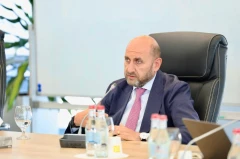
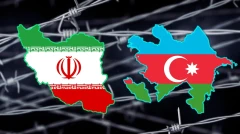
On February 15, at a news conference held jointly with Kazakh Foreign Minister Qanat Saudabayev, who is OSCE Chairman-in-Office, Azerbaijani Foreign Minister Elmar Mammadyarov made one more step designed to thwart the Nagorno-Karabakh peace process. Mr. Mammadyarov’s statements can also be viewed as a response to the Armenian President’s speech in London.
So what did Mr. Mammadyarov actually do? While calling the revised Madrid Principles acceptable and expressing official Baku’s readiness to continue the Nagorno-Karabakh peace process, he set an unacceptable condition to the Armenian side. According to the Azerbaijani FM, official Baku’s position is clear: “The country sees Nagorno-Karabakh as part of Azerbaijan, provided the Armenian and Azerbaijani communities co-exist there.”
Thus the top-ranking Azeri official once again showed his state has no intention to make any concessions in the Nagorno-Karabakh peace process thereby calling into question the very sense of the negotiations. Moreover, his view of Nagorno-Karabakh’s future status runs counter to the Armenian side’s position.
Indeed, what “peaceful co-existence of the Armenian and Azerbaijani communities” in Nagorno-Karabakh — even with its highest status in Azerbaijan — can we speak of if that country proved unable to ensure its citizens’ security when it was one of the republics of the Soviet Union? The Azerbaijani FM is now speaking of “ethnic cleansing” by Armenians, while he is cynically silent about the coherent policy of forcibly expelling the native Armenian population from Azerbaijan. The person conducting negotiations for a peaceful settlement of the conflict is repeating like a parrot the things official Baku has been wailing about for more than 15 years. What progress in the negotiations are the international mediators speaking about if the Azerbaijan authorities have not changed their rhetoric or actual steps allegedly aimed at a peaceful settlement? True, the Nagorno-Karabakh conflict forced about 200,000 Azerbaijanis to leave Armenia. However, they were not subjected to violence and were able to sell their property. On the other hand, twice as many Armenians were displaced from Azerbaijan – over 200,000 Armenians had to leave Baku alone. The acts of ethnic cleansing, which were committed by the Popular Front of Azerbaijan (PFA) and are now being justified by the Aliyev clan, were accompanied by Armenian pogroms and murders in Baku, Sumgait, Kirovabad and other cities of Azerbaijan. No Armenian remained in the Shahumyan region, which was occupied and committed to flames by Azeris, whereas Armenians constituted almost 100% of the region’s population before the conflict.
The sides can engage in endless “exposures” and recriminations. It is not clear, however, what is the purpose of the Minister of Foreign Affairs of one of the parties to the peace process – in the context of “Azerbaijan’s commitment to a peaceful settlement of the conflict.”
One draws the inescapable conclusion that, while claiming they agree to what is known as the Madrid Principles, the Azerbaijani authorities are actually against the international mediators’ proposals. With this end in view, on the threshold of a regular meeting with Armenian representatives and international mediators, Azerbaijan is setting terms that are inherently unacceptable to the Armenian side.
Official Yerevan, which actually agreed to painful concessions, through the mouth of Armenian President Serzh Sargsyan, stressed last week that it is impossible for Nagorno-Karabakh to be part of Azerbaijan. Not that it is Armenians’ whim — the world history does not know any instances of victors returning everything to the losers. Speaking at Chathman House in London, the Armenian leader stated: Azerbaijan has proved its inability to ensure the security of the Armenian population in Nagorno-Karabakh, which rules out the possibility of Nagorno-Karabakh being returned to Azerbaijan. For many years the Azerbaijani authorities have not been able to refute this argument.
The international mediators, instead of making evasive statements on progress in the Nagorno-Karabakh peace process, had better think of which of the sides is actually trying to thwart this same process.
T.P.