make preferable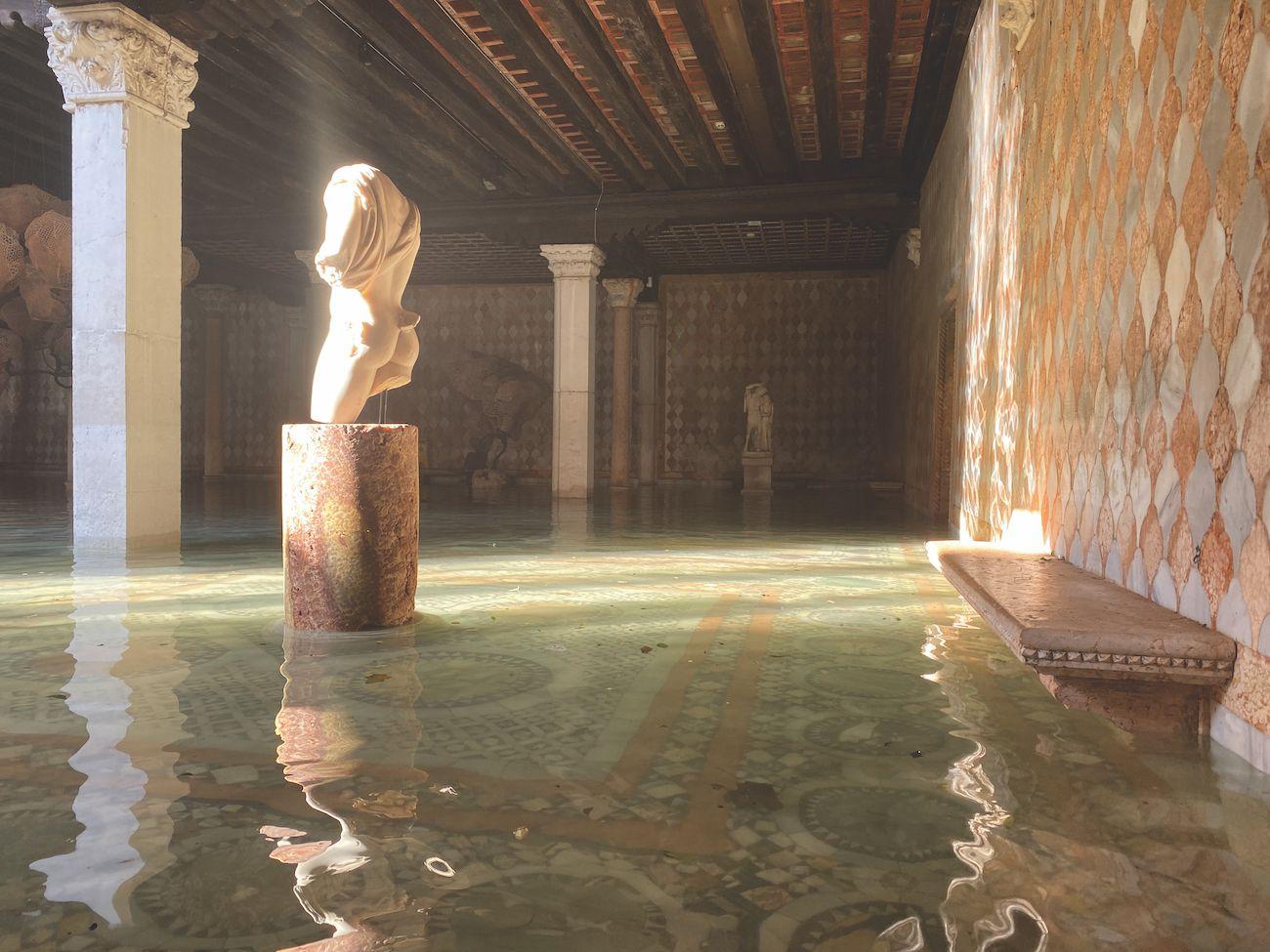
Climate change threatens not only energy, the economy and biodiversity, but also cultural heritage, The Conversation reports.
Some 43% of UNESCO World Heritage Sites in Europe are currently highly exposed to extreme weather events, flooding, and rising sea levels. The respective research arrives at this estimate by applying the climate risk quantification methodologies developed at the EDHEC Climate Institute to relevant physical assets sourced from the UNESCO spatial database.
This vulnerability does not only affect a few iconic sites, such as Venice, or certain historic centers in the Mediterranean. It affects the whole of Europe’s cultural infrastructure, including less visible artifacts, which are often scattered among churches, libraries, local collections, or small museums.
Paintings and frescoes are threatened by high humidity and mold, temperature fluctuations, and acid rain. There are also increasingly frequent risks of fires, floods, and landslides. A survey of American art museums reveals that 35% of directors report having already suffered climate-related damage, while 50% say they have put specific plans in place to address these risks.
In France, the Louvre Museum has, in fact, begun transferring around 250,000 works to its Lievin Conservation Center, in Pas-de-Calais, in order to protect the national collections from the risk of flooding.
Musical heritage itself is not immune to this climate-related fragility. The manufacture of musical instruments depends on natural resources that are particularly vulnerable to global warming. The tonewood spruce from the Val di Fiemme in the Dolomites (Italy), historically used for Stradivarius violins, is now threatened by rising temperatures and the spread of pests. The woods used for bows and stringed instruments are also becoming scarcer due to water stress and deforestation.
Concert halls and opera houses are also directly at risk. In Venice, climate projections suggest that by 2100, the increase in episodes of “acqua alta” could make it impossible to maintain normal operations at La Fenice opera house.
Other major cultural venues located in coastal areas could face similar challenges: the Royal Festival Hall (London, UK), Harpa (Reykjavik, Iceland), the Sydney Opera House (Sydney, Australia), the Elbphilharmonie (Hamburg, Germany) and the Muziekgebouw aan’t IJ (Amsterdam, Netherlands).
Some major European cultural regions could suffer significant economic losses by the end of the century as a result of climate-related physical risks. The impacts on local gross regional product (the equivalent of local GDP) are particularly pronounced in Mediterranean cities.
By 2100, losses could reach 32% in Madrid and up to 41% in Rome, a level significantly higher than that estimated at national level, where Italy’s GDP decline is projected at 19%. Other major European capitals are also severely affected, with losses estimated at 13% in Vienna and 18% in Berlin.
Unlike many economic assets, cultural assets cannot simply be replaced by additional investment or technological progress. A fresco destroyed by damp cannot be replaced. An ancient mosaic damaged by thermal stress or acid rain cannot be recreated identically. A submerged archaeological site is lost irreversibly.
It is precisely this notion of irreversibility that distinguishes cultural heritage from other categories of economic goods.
The difficulty lies in the fact that it is not merely a matter of protecting objects or buildings, but of preserving the physical conditions that enable the continuity of history, heritage, and artistic creation.
The authors of this research believe that there is still an opportunity to preserve this heritage, but time is running out to take the necessary measures.