Preferred
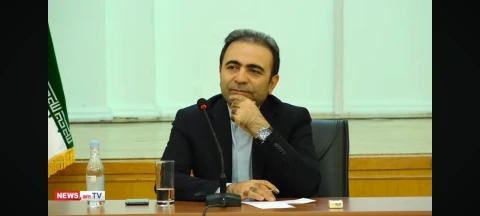
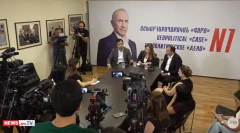
“The interests of Russia and United States in our region were and do remain conflicting. Although they keep on speaking of ‘restarting’ relations, these are mere talks,” Ruben Mehrabyan, expert for the Armenian Center for Political and International Studies, told NEWS.am. “In fact, the two superpowers’ interests have remained unchanged, and they are still observing the rules of zero sum game,” he said.
As to what accounts for the fact that the Armenian-Turkish relations proved to be the issue Russia and United States reached an agreement on in the context of the Caucasus, Mehrabyan said: “Russia and United States have different motives. Americans do not want the Armenian-Turkish relations to be linked to the Nagorno-Karabakh peace process — for the Armenian-Turkish border to be reopened to enable Armenia to get rid of absolute dependence on Russia. It will give the United States access to the Caucasus not only through Georgia, but also through Armenia. Americans believe that Armenian-Azerbaijani relations will not register any changes for a rather long period.
”But Russia, which controls Armenia’s entire system and ‘lucrative’ economic sectors, wants the border to be reopened. Russians do not want it to be linked to the Nagorno-Karabakh peace process either, as, following their own strategy, they view Nagorno-Karabakh as a hook for Armenia and Azerbaijan to hang on."
Which of the strategies will prove the winner should the Armenian-Turkish border be reopened? “First of all, it is turkey that is to re-open the border. I am sure that no Turkish authorities will take the risk unless any progress in the Nagorno-Karabakh peace process takes place. But if the border is re-opened, Russia will lose its monopoly over Armenia. Moscow is well aware it cannot retain ‘one hundred percent’ so it is following this way to relieve the tension in the South Caucasus after the Russian-Georgian conflict and diversify its presence by converting it from politico-military into economic presence,” Mehrabyan said.
T.P.