Preferred
Albert Khachatryan
At the presentation of the EBRD Transition Report 2009 in Yerevan, Helena Schweiger, EBRD Principal Economist for Armenia, pointed out that the first wave of the global crisis did not affect Armenia, as the Armenian banks were not seriously dependent on the global financial market nor were derivatives actively used. So the Armenian banks’ conservative policy proved to be of benefit to both commercial banks themselves and the country as a whole.
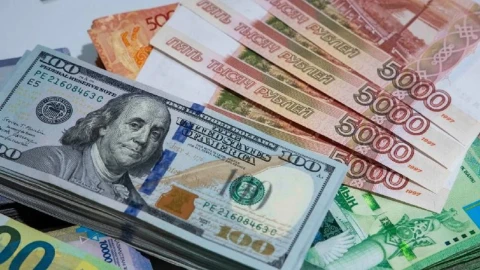
The second wave of the crisis, which developed from an economic into a financial one, changed the situation. Armenian guest workers’ businesses in Russia went bad, which affected money transfers to Armenia. The amount of money transfers to the country showed a 30.6% decrease (a total of U.S. $694.9m) in 2009 against 2008, which immediately affected many business sectors, particularly construction, which is actually paralyzed.
After outlining the present state of the Armenian economy, EBRD experts turned to the saving recipes for economic recovery. First of all, they pointed out the necessity for reforming Armenia’s business environment. As regards the means of achieving success, the EBRD experts singled out the Government’s anti-monopoly policy.
It is common knowledge that, in an Armenia-like country, business integration with power creates perfect conditions for monopolies. A number of markets are shared by few market members or only one economic entity dominates them, which is actually the same.
The Government’s economic policy actually encourages big business. Some goods markets, which are, in fact, fully controlled by narrow business circles, are “tightly closed” for other businessmen. And, of course, in trying to get access to monopolized markets, “the newcomers” encounter various obstacles.
Underlining the role of small-to-medium business, the EBRD urged the RA Government to support them. The EBRD, for its part, supports Armenian businesses irrespective of their being small or big ones. No other explanation for the attention such an influential bank pays to such “a trifle” as retail trade can be offered.
We would like to remind the readers that the European Bank for Reconstruction and Development (EBRD) and the STAR supermarket chain signed credit agreements last year. Under the agreements the EBRD was to allocate a total of U.S. $5.5m to the STAR chain. Under the circumstances, when small and medium-sized enterprises can hardly compete with their “big counterparts”, the EBRD’s support for big businesses seems to be contrary to its slogans.
T.P.