Preferred
The grave economic problems in Armenia have deep roots. The global crisis, however, brought the real situation to light. So we feel greatly surprised at the fact that the roots have only now proved to be “a revelation” for the top officials of Armenia’s leading ministries.
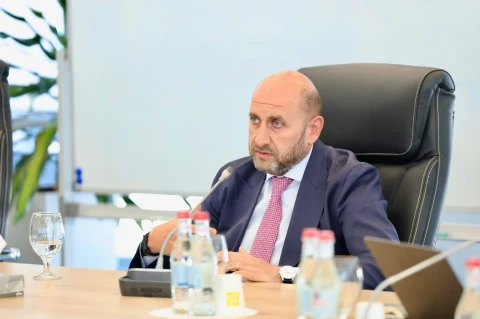
Speaking at the international economic forum Bridge-2010, which is traditionally held in the resort town of Tsakhkadzor, RA Minister of Economy Nerses Yeritsyan outlined the fundamental principles of economic development. The Armenian economy can only be developed and diversified provided the state government, pension and insurance systems are reformed. Reforms, however, have always been carried out in a rather strange way in Armenia. Suffice it to mention the metamorphoses different ministries had undergone to finally turn into the government agency headed by Mr. Yeritsyan. What is the result? With the disastrous consequences for our national economy considered, just nothing!
As regards the introduction of corporate management principles into the private sector, which fact was mentioned by Mr. Yeritsyan, the idea is far from being an original one. International banks have for years been alluding to the lack of corporate business management in Armenia. But local businessmen are unwilling to share their “power” with others. Less than a thousand open corporations are officially registered in Armenia, with most of them not attractive to investors. On the other hand, over 3,200 close corporations are registered in the country, with large and profitable companies being among them. They are prospering, without having to sell their shares to attract additional capital. The government does not — or does not want to – play any role in this process.
With the measures taken and funds spent, the Government seems to be rendering effective assistance to small-to-medium businesses. In fact, however, the businesses are surviving due to other factors. A rather large number of factors hindering SMB development can be pointed out. We would like to dwell on some of them: red tape; corruption and bribery; monopolized markets; high credit interest rates; nepotism, tax burden, etc.. Of interest is the fact that the problems have for year remained unresolved.
The Union of Employers of Armenia reported that SMBs constitute about 98% of Armenia’s enterprises, but their share in Armenia’s GDP is 49%, that is, only 2% of Armenian enterprises ensure the lion’s share of GDP. This concentration of economic power has been typical of Armenia for the last few years. The situation is going to get worse. The impending price rise to follow the rise in gas prices is going to deliver a severe blow on the “weak”, namely SMBs.
Speaking at the forum, RA Minister of Finance Tigran Davtyan caused a sensation similar to great geographic discoveries. After Armenia and Georgia have been neighbors for centuries, Armenian officials “discovered” the necessity for forming a regional market with Georgia. Yes, their eyes were opened at last! Armenia is ready to sign friendly and economic cooperation agreements even with Cayman Islands. By the way, the “islanders” established two joint ventures in Armenia long ago. As many as 163 Armenian-Georgian joint ventures have been established as well. But, if we consider investments in the enterprises, they show a great difference. Investments in the joint ventures set up by the “islanders” total 24bn AMD, whereas only 471m AMD have been invested in the Armenian-Georgian JVs. It is clear that the exotic islands are a mere cover for various businesses, including large ones. This, however, is not a justification for such an attitude.
In this context, we would like to recall informal cooperation with Georgia in the tourist industry – for reasons “unknown” to the ministers, tourists normally order one-way tickets, from Armenia to Kobuleti, Georgia. Everyone, but officials, is well aware of the reasons for Armenian citizens’ preferences. So they are trying to resolve the problems applying “scientific methods.” For example, they want to know the tourist potential of Jermuk, and the “important” research requires a total of €200,000!
There is nothing new under the sun. Minister Yeritsyan also proposes “taking” old Swiss cableways and installing them in Jermuk, as “many of them can operate for another ten years.” We can remember the “experiment” with the old buses presented to Armenia by France and Italy. Just a few months later, the Yerevan Municipality stopped operating the “free” buses.
Great discoveries have been made, and fresh ideas put forward. So let us wait for them to be put into effect.
T.P.