make preferable
By Samvel Avagyan
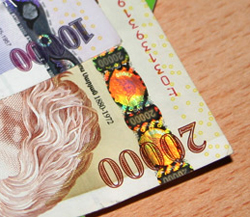
According to the data published by the Central Bank of Armenia (CBA), the de-dollarization tendencies in the Armenian economy are the main cause of AMD revaluation.
The demand for AMD loans is growing. November 15 to 21, AMD loans totaled 16.6 billion AMD (about U.S. $46 million), while USD loans total 40 million. This October AMD loans showed an upward tendency. Over 50% of the issued loans were in USD terms before.
Deposits showed a de-dollarization tendency. However, according to the information at our disposal, USD deposits exceed AMD deposits. Banks accept less AMD deposits than issue loans, which causes AMD “hunger” and AMD revaluation. On the other hand, exchange offices register additional demand for U.S. dollars. Last week, purchases totaled U.S. $70 million, and sales U.S. $77 million. This means that citizens and economic entities still expect AMD devaluation and they prefer purchasing U.S. dollars.
Over the pas week the CBA has reduced the monetary base, especially cash funds, thereby contributing to the AMD “hunger.” At present, the monetary base is about 451 billion AMD (about U.S. $1.2), with cash funds totaling 316 billion AMD (about U.S. $880 million). This is not the minimum level over the recent months. So it is yet early to speak of any AMD deficit in the context of general economic situation. The monetary base is likely to increase as holiday trade is nearing. Late in 2009, the AMD base exceeded 500 billion AMD. Such fluctuations are the main cause of the holiday price rise, as a surplus is formed in the economy.
This year, the monetary base has undergone de-dollarization as well. The share of required currency reserves in the monetary base has sharply decreased. By November 26, the required currency reserves had constituted about 14.5% against 31% early this year.
Thus, de-dollarization is the main cause of AMD revaluation and further expectations of price rise. The CBA’s containment policy contributes to AMD revaluation as well.