make preferable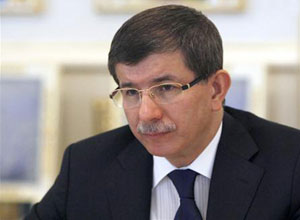
“Just 10 years ago the Armenian question was a taboo in Turkey, but now our public freely discuses it. The events in the early 20th century were denied before, and now Turkey does not deny that Armenians suffered tragic events.” stated the Turkish Foreign Minister Ahmed Davutoglu in Washington, Voice of America reports.
According to him, to normalize relations with Armenia, Turkey has taken another step - signing of the protocols- and problems between the two countries in general did not occur because of Turks and Armenians. The cause of the Armenian Genocide he blamed on intensification of nationalist movements in the fall of the Ottoman Empire.
“1915 is an important date for the Armenians, but we must also remember that in the same year, about 250,000 Turks were killed in just one battle, and among them was my grandfather. If there were mistakes, they should be named. We must remember that we are talking about the historic period, when there was no law and order in Turkey”, said Davutoglu.
Answering the question whether there are any other reasons for not ratifying the Armenian-Turkish protocols, except the upcoming parliamentary elections in Turkey and the Karabakh problem, Davutoglu said: “Unfortunately, the Constitutional Court of Armenia made a decision to exclude the establishment of a commission of historians that was important for Turkey.”
From the perspective of the Turkish Foreign Ministry, the Armenian-Turkish protocols pursued a goal of normalizing relations between Armenia and Turkey, to achieve better relations between Armenians and Turks all over the world, bringing stability to the Caucasus region, in particular, and the resolution of the Karabakh conflict.
Davutoglu stressed once again that without the settlement of the Karabakh problem there will not be any progress in the ratification of the Protocols. “Even if the Armenian-Turkish protocols are ratified without an agreement between the Armenian and Azerbaijani sides, in case of aggravation of the situation Turkey will once again close the border”.