make preferable
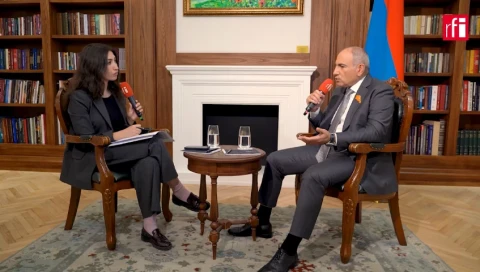
NEWS.am presents an e-mail interview with IMF Resident Representative in Armenia Guillermo Tolosa.
Q: Mr. Tolosa, how would you evaluate the passing year. In your opinion has Armenia completely overcome the economic crisis?
2010 was a relatively good year for Armenia. Many sectors with the exception of construction recovered pretty rapidly from the crisis, only with agriculture suffering major downturn resulting from both adverse weather and underlying structural problems. Armenians’ income did even better given that remittances recovered quite significantly from 2009.
Armenia has confidently left the storm behind, but is now in a new stage that will be characterized by a significantly more difficult environment than the one experienced before the crisis. The global economic recovery is fragile and uneven; Europe, an important trading partner, is facing tremendous challenges; and the massive impulse to the Armenian economy received from the construction sector in the boom years will be absent given significant unsold inventory of housing units. Against this background, it will take some time for Armenia to reach the living standards it reached in 2008.
Q: This January-November inflation exceeded 8%. The prices for numerous products reached the European level and even exceeded it in some cases. Can we say that the prices for a number of home-made products (crop production, animal produce, fish products) are measuring up to prices for imported products?
International prices for many commodities have increased sharply recently, and Armenian prices have naturally followed this trend. For example, since July in international markets corn and rice increased more than 40 percent and soy and wheat more than 20 percent. Consistently, for example, bread prices in Armenia increased more than 10 percent in last four months. This trend at the international level is not likely to continue, so increases should considerably moderate. However, that said, the level of some selected Armenian prices is indeed relatively high in the international comparison because of structural efficiency shortcomings in the distribution sector, limited competition among importers and producers in some import-substituting sectors.
Q: Will the current rise in prices for agricultural produce promote agricultural import to Armenia?
As described above, for most cases agricultural prices are also increasing abroad as well, so it is unlikely there will be an incentive for a generalized increase in imports.
Q: Is Armenia likely to follow the ‘Greek scenario’ due to its external debt?
No. As reference, Armenia’s public debt is 44 percent of GDP while Greek is 141 percent of GDP. However, Armenia has less access to markets and would already face repayment problems with much lower levels of debt than Greece, so it should become very conservative with new borrowings going forward. This is a key consideration in the authorities’ recognition of the importance of the fiscal adjustment in 2010 and over the medium term.
Q: What expectations or hopes you have from 2011? What economic growth do you forecast for 2011?
2011 should be another reasonably positive year for Armenians. We see Armenia growing at 4.6 percent in 2011, with most sectors of the economy benefiting from this trend. However, given the wide range of shocks to which Armenia is exposed, risks are tilted to the downside.
Q.: What would you like to wish the Armenian people?
I wish all Armenians workers and businesses could have greater opportunities in Armenia. I wish Armenia can finally make the breakthrough and become the dynamic, exciting and vibrant economy that deserves to be.