make preferable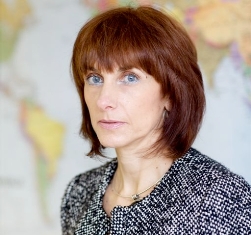
NEWS.am presents an e-mail interview of the UN Resident Coordinator/UNDP Resident Representative in Armenia Dafina Gercheva.
Q: How would you evaluate the passing year?
2010 was a challenging year for Armenia as the country struggled to overcome the consequences of the global financial and economic crises, which have negatively affected all aspects of socio-economic life in the country. The response to the impact of the crisis on human development in Armenia has shaped the UN priorities for 2010. Over the past year the main focus of our work has been on improving the access, quality and affordability of social services, bridging regional disparities and overcoming social inequalities and exclusion. The strategic partnerships with the Government and other development actors have been further strengthened thus contributing towards accelerated human development and attainment of the Millennium Development Goals (MDGs).
Q: What event would you single out as most memorable?
In 2010 the second United Nations Development Assistance Framework (UNDAF) was launched. The priority areas of the UN family in Armenia are fully aligned with national goals and development aspirations. Among the numerous undertakings spearheaded by UN this year, I would like to mention few, which I believe are of strategic importance for the country and its citizens.
This year we launched also the Second MDG National Progress Report. The document assesses the main trends and the current state of progress towards achieving the MDGs, taking into consideration the impact of the global economic and financial crisis. As a result of the economic downturn registered in the country since the fourth quarter of 2008, the Progress Report further refined the nationalized MDG targets and indicators to provide more up-to-date data and address more precisely the main challenges Armenia faced.
UN in Armenia is implementing a “Sustainable Livelihood for Socially Vulnerable Refugees, Internally Displaced and Local Families” project in Geghamasar and Pambak communities of Gegharkunik region, funded by the UN Trust Fund for Human Security. The two-year project initiated in April 2009 has the main objectives to strengthen the capacities of local self-government bodies for strategic planning and running day-to-day activities, as well as improving the skills of 565 vulnerable households for income generation activities and increasing opportunities for start-up businesses. It is expected that by the end of the project all households will be fully integrated into the community based organizations. During the project implementation phase, UN supported the two communities to develop 2009-2012 Participatory Strategic Community Development Plans which were approved by the Community Councils. About 400 target families from Geghamasar and Pambak communities were selected and their skills and needs were identified, vocational trainings on farming production cycle were provided to the beneficiaries. The goals of the project could not have been materialized without provision of needed agricultural production means and machineries to the beneficiaries. UN procured and distributed 100 tons of wheat seeds and 62 tons of fertilizers, as well as various types of agricultural machinery.
A practical database tool, ArmeniaInfo, was introduced by the UN Office in Armenia. It allows development practitioners, decision-makers, researchers and the general public to retrieve data on MDGs in various formats. The database also helps to quickly share data on human development and socio-economic indicators among various institutions and departments and monitor development trends over time.
Over the past few years, UN’s support to strengthen the national Disaster Risk Reduction (DRR) system has evidently resulted in an increased interest and commitment from national stakeholders. Apart from few pilot DRR initiatives that served as a good entry point for a more comprehensive cooperation, the DRR capacity development process, commissioned jointly with the Ministry of Emergency Situations, and capacity self-assessment of DRR system have made significant contributions in attracting attention of national stakeholders on DRR issues. This provided a forum to identify current gaps and elaborate a strategic vision for an effective and efficient DRR system in Armenia. The partnership paved the way to the establishment of the National Platform for DRR - a multi-stakeholder forum for coordination of all DRR-related issues and a foundation for the elaboration and implementation of national DRR strategy. UN’s facilitation support to these processes have encouraged various stakeholders – government, donors, NGOs, scientific and academic entities - to jointly discuss and analyze DRR issues and agree on improved coordination mechanisms in various aspects of DRR, such as risk assessment, disaster data management, DRR strategy development, public awareness, education, etc.
It is worth mentioning also the adoption of the Strategy of the Demographic Policy of Armenia and its Action Plan (2009-2035), which, among other demographic challenges will address issues such as low fertility, aging, migration.
Q: In your view what role did the UN play in year 2010 in Armenia?
There are 13 UN agencies, funds and programs in Armenia and they all enjoy respect and confidence of the Government of Armenia and other development partners. The development assistance provided by the UN system is aligned with national priorities, thus, ensuring development effectiveness and strengthened national ownership. 2010 was the first year of implementation of the second United Nations Development Assistance Framework (UNDAF) – a framework document that sets the basis of our partnership with the Government of Armenia for the next 5 years. The following 4 priority areas have been identified jointly with the Government: (1) inclusive and sustainable growth is promoted by reducing disparities and expanding economic and social opportunities for vulnerable groups; (2) democratic governance is strengthened by improving accountability, promoting institutional and capacity development and expanding people’s participation; (3) regional disparities in key human development indicators reduced with a view to achieving the national MDGs; and (4) by 2015 national authorities implement environment and disaster risk reduction in the framework of national and local development programmes.
Within this spectrum, we worked hand-in-hand with all our counterparts to mobilize efforts and resources towards the achievement of the MDGs. In particular, we have enhanced the capacity of key Ministries, improved the alignment between the demand and supply at the labor market; empowered civil society; advocated for low carbon economy and green jobs; and facilitated energy efficiency investments.
Q: What new programs, activities are planned in 2011?
I would expect 2011 to be a year of accelerated growth, macro stability, social inclusion and further advancement of democracy and human development. The negotiations of the EU Association Agreement will continue next year and their successful completion is contingent upon concerted efforts driven and owned by the Government, and targeted and efficient development aid. UN stands ready to respond to the demand for reinforcing state capacity, thus assisting the country to meet the MDGs and fulfill its commitments vis-à-vis other international agreements. The ultimate objective of our work in 2011 will be improved wellbeing of Armenian citizens and advanced democracy. This objective will be achieved through targeted programs in the areas of: democratic governance, poverty reduction and social inclusion; climate change and energy efficiency and provision of quality social services.
Q: Would you like to share your plans for the holidays? Do you prefer to stay in Armenia or travel?
Christmas is a day of meaning and tradition, a special day spent in the warm company of family and friends. I will celebrate Christmas and New Year holidays surrounded with family members, friends and relatives. I am sure the family warmth will double the energy which is necessary to fulfill my tasks as the head of UN in Armenia. And still during my tenure I will have an opportunity to spend these holidays in Armenia with many Armenian friends that I managed to make during my first year in the country.
Your wishes to the Armenian people.
My wish for the Armenian people, and for all of us, is that 2011 will be a year full of optimism, enthusiasm, peace and prosperity. Every New Year makes us more confident, experienced and wise. Let us use these skills for the benefit of our fellow citizens, of our families and friends. Let us be vigilant and restless in our efforts towards enhancing regional security and accelerating human development. Let us be united and committed to shape up the bright future of beautiful Armenia! I would also like to take this opportunity and extend my personal and sincere thanks to all my UN colleagues, government counterparts and other friends and partners with whom I have worked over the passing year, for their great support, dedication to the noble cause of development, high professionalism and commitment to induce transformational change thus contributing to country’s resilience and successful transition process.