make preferable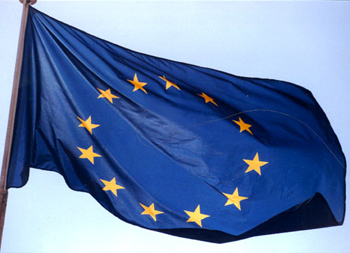
The European Union should use robustly its soft power to tackle in a comprehensive way the many problems that Armenia, Azerbaijan and Georgia still face twenty years after they regained their independence, said authors of the report on security challenges in the South Caucasus.
Speaking at a policy dialogue organized by the European Policy Centre in Brussels on Wednesday, the Executive Director of LINKS, Dennis Sammut argued that the policy to support stabilization in the region in the last two decades was necessary but that unless some of the root causes of instability were eliminated there was a danger that the region would plunge into further war and turmoil.
Mr Sammut recommended that EU initiate a diplomatic effort to launch a South Caucasus Security and Co-operation Conference, with a view to achieving a South Caucasus Security and Co-operation Treaty by 2014. This process should be multilateral in approach, modelled on the OSCE and working within the framework of that organization. The initiative must be ambitious in looking at a range of problems and ways in which their solutions can be mutually reinforcing. It must also be inclusive, in bringing in all stakeholders, including the unrecognized or partly recognized entities of Abkhazia, South Ossetia and Nagorno-Karabakh, as well as civil society representatives, particularly those representing displaced persons and refugees.
Mr Sammut said that the European Union must find a mechanism on how to engage with the unrecognized entities whilst continuing to withhold formal recognition. The EU must also put the issue of the return of the hundreds of thousands of refugees and IDPs displaced by the conflicts of the last two decades at the centre of its policy towards the region.
Dennis Sammut said that the biggest challenge for the European Union was to turn Russia into a partner for resolving the problems of the Caucasus. Russia’s concerns needed to be addressed without in any way accepting Russia’s claims to spheres of influence. This could be done perhaps through engaging more constructively with Russia in the dialogue on broader European security, initiated in 2009 through the so called “Corfu process”.
The speaker urged the EU to engage with the countries of the South Caucasus in a transparent way and to further demand for transparency in all spheres of life in the region. Lack of transparency seriously undermines the peace processes in the region, is one of the main causes for the lack of accountability and is one of the main obstacles to democracy and good governance.
The European Policy Centre in Brussels yesterday released a paper co-authored by Dennis Sammut and Amanda Paul entitled “Addressing the security challenges in the South Caucasus: the case for a comprehensive, multilateral and inclusive approach”.