make preferable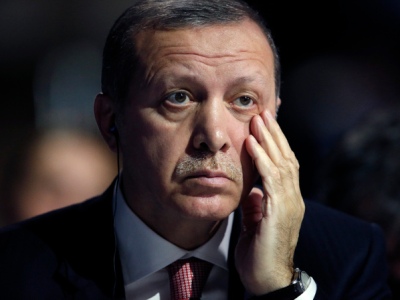
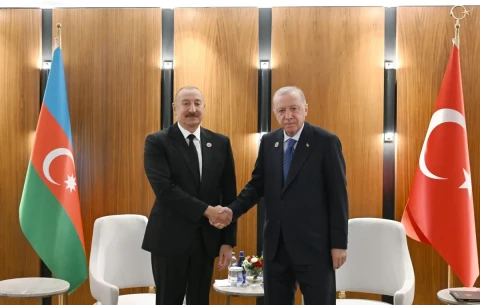
Talks between the EU and Turkish President Recep Tayyip Erdogan on the fate of millions of refugees in Turkey ended with each side reiterating its position and dissatisfaction with the other, Bloomberg reported.
“Then the Turkish president went home, to fulminate anew about the perfidious Europeans who shirk their responsibility in dealing with a terrible humanitarian crisis. European leaders, in turn, will rail against the cynical Erdogan who uses that crisis to extort more aid,” the source added.
Soon, the second act will begin, during which the players will begin to move towards a solution. German Chancellor Angela Merkel has already announced her readiness to do so.
This would help everyone, but especially refugees if players could quickly move on to the third act, in which Europe promises to allocate more resources, and Erdogan grudgingly agrees to keep refugees in Turkey. Since that is the only possible outcome, the sooner it comes the better.
A quick reckoning with Erdogan will save refugees who are already experiencing unthinkable difficulties and humiliations, being used as a backup in this ugly farce. Being driven to the European border in the false hope of salvation, and then rejected by tear gas and bullets, is certainly a form of human rights violation.
It makes no sense to talk about the scale of the crisis or the plight of the people who are drawn into it: according to estimates by the UN Refugee Agency, there are over 4.1 million refugees in Turkey, including 3.7 million from Syria. Recent hostilities in the Syrian Idlib have triggered a new flow of refugees to Turkey, and it is unlikely that hundreds of thousands of people living in fragile tents now have high hopes for a ceasefire reached between Erdogan and Russian President Vladimir Putin. When hostilities inevitably resume, the pressure of desperate Syrians on the border with Turkey will increase exponentially.
General decency requires the EU to improve the financial conditions of the 2016 deal, according to which Europeans agreed to provide $ 6 billion to Turkey to help refugees. “It is likely that they will respond to Erdogan's blackmail: pony up, or I send the refugees your way,” Bloomberg added.
For those who may have forgotten the paroxysms of fear and xenophobia that shocked Europe five years ago, before Turkey stopped the flow of refugees, a sobering reminder came last week. While several thousand refugees abetted by Erdogan tried to cross the border with Greece, the government in Athens suspended the acceptance of asylum applications. There were threats of violence by local warriors and scary warnings from far-right politicians throughout Europe.
The EU leadership may accuse Erdogan of arming the refugees, but they must accept a large share of the blame for the inability to reform their migration systems and for making themselves vulnerable to Turkish threats.
“There is just a sliver of hope that the Europeans will take some of the refugees, at least the most vulnerable. Perhaps the German plan for a “coalition of the willing” (rather than the entire EU membership) to take some more might be revisited. The consensus required for Erdogan’s other pressing demand, visa-free travel for Turkish citizens throughout the EU, is unlikely to materialize,” it is said.
Erdogan could have agreed to a deferment on this point; he also has little room for maneuver. The president’s political position has recently been shaken: his AK party lost elections in most major cities last year, and former associates create political parties to challenge him. His ambitions in the international arena failed in Syria. Despite nationalist fervor, a ceasefire deal with Putin made many Turkish positions vulnerable.
Erdogan is desperate for a political victory, and Europeans, for the most part, desperately want to keep refugees away from their borders.
So, grinding their teeth, the Europeans will squeeze out the extra help that Erdogan wants.