make preferable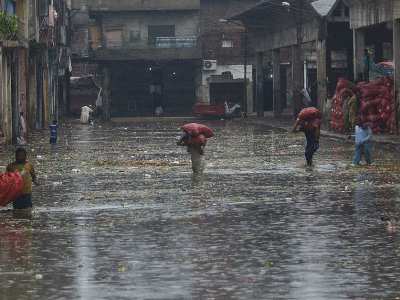
Pakistan has called on the international community to provide emergency assistance as it struggles to deal with the aftermath of heavy rains that caused massive floods last month that killed more than 800 people, Reuters reported, citing officials in the country.
Financing and reconstruction will be a challenge for cash-strapped Pakistan, which is forced to cut spending in order for the International Monetary Fund to approve much-needed funds.
In July, the country's rainfall was almost 200% above the average, making July the wettest since 1961, Sardar Sarfaraz, senior official at the metrology department, told the agency.
Heavy monsoon rains and flooding since mid-June have affected about 2.3 million people in Pakistan, destroying at least 95,350 homes and damaging 224,100 more, according to the UN Office for the Coordination of Humanitarian Affairs.
The most affected provinces are Sindh in the southeast of the country and Balochistan in the southwest. More than 504,000 livestock died, almost all in Balochistan, and damage to almost 3,000 km of roads and 129 bridges made it difficult to travel through the flood-affected areas.
The main supply route from the port city of Karachi was interrupted for more than a week after a bridge connecting it to Balochistan was demolished and dozens of small dams in the province were overfilled.
In Sindh province, the government has closed all educational institutions in anticipation of more rain forecast for Wednesday and Thursday, and the airport in Nawabshah district remains closed as the airfield is almost completely flooded.
This is a climate disaster of epic proportions that will lead to a humanitarian crisis comparable in scale to the great flood that occurred in 2010, Pakistani officials fear.